
For the past month, a student movement in Bangladesh has been protesting against the government. Initially, the protests were focused on an employment quota issue, but they have now escalated to demanding Prime Minister Sheikh Hasina’s resignation and the formation of an inclusive national government.
-Despite a dialogue offer from Prime Minister Hasina, the student leaders rejected it, stating that the time for apologies had passed.
-The protests, which started in early July, turned violent, leading to nearly 200 deaths and thousands of arrests. Mid-July, the violence escalated, leading to a curfew and the deployment of the army.
-Although Hasina expressed a desire to listen to the students and called for the release of detained students, the students remained unwavering in their demands.
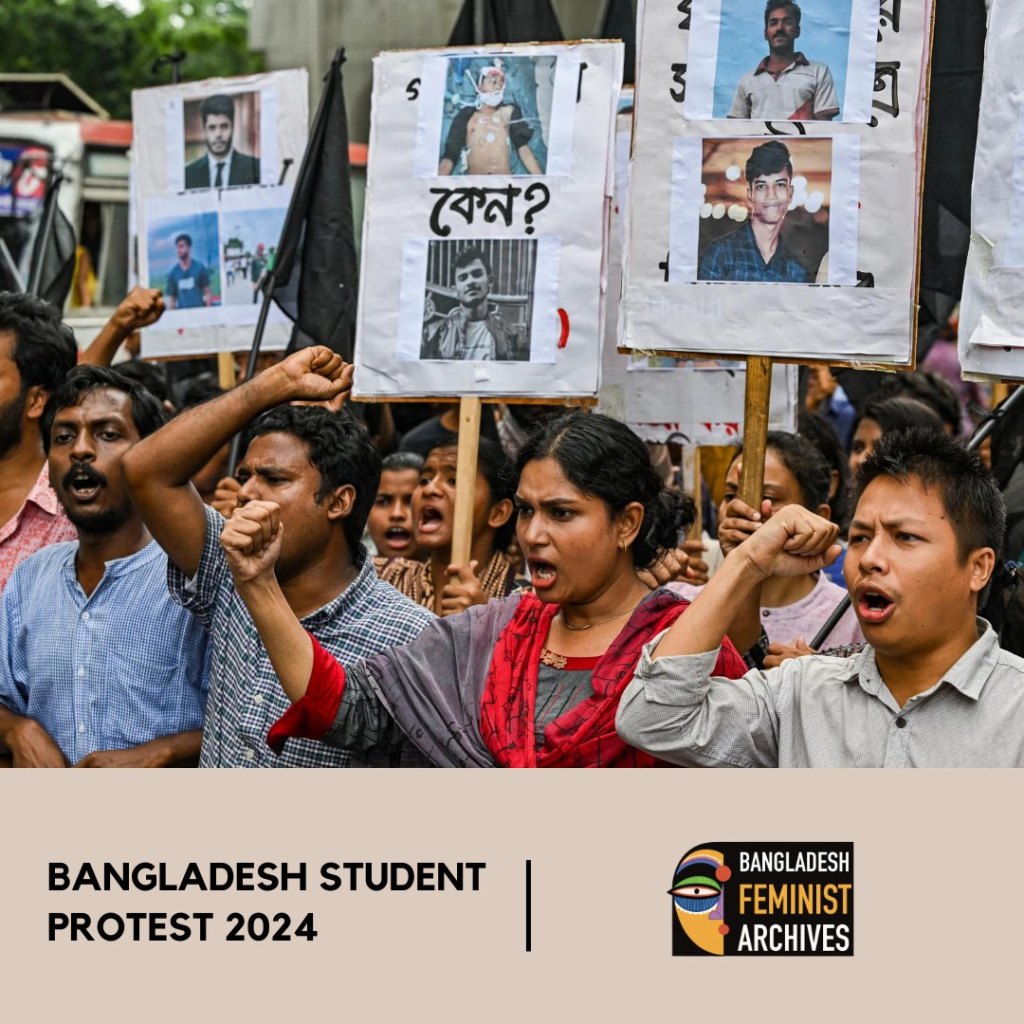
-The protests began after the High Court ordered the restoration of a 30% employment quota for descendants of 1971 liberation war veterans, which the protesters saw as discriminatory.
-Between July 16 and 21, clashes resulted in numerous deaths, with conflicting reports on the death toll. Amnesty International accused security forces of disproportionate repression, including internet cut-offs and curfews.
-Over 9,000 people were arrested, and the government outlawed the main Islamist party, Jamaat-e-Islami, blaming opposition parties for the violence.
-Despite the Supreme Court abolishing most of the quotas, protests continued, and recent clashes resulted in more deaths, including security personnel.
-As of the latest reports, students have continued to take to the streets, leading to further clashes and unrest in the country.
 Bangladesh Feminist Archives