
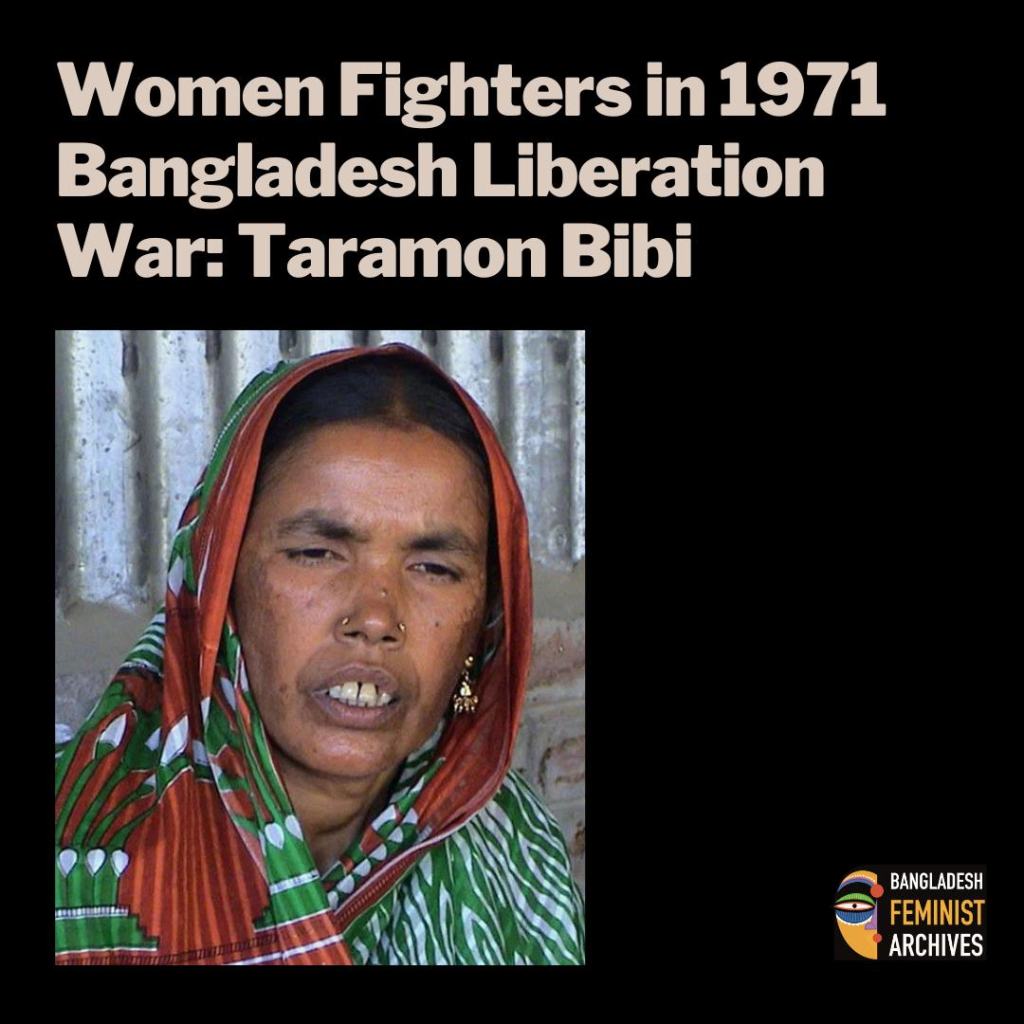
Taramon Bibi (1956–2018) was a Bangladeshi freedom fighter and one of the few women who directly participated in combat during the Bangladesh Liberation War in 1971. She was honored with the prestigious title of “Bir Protik” (Symbol of Bravery) for her courageous contributions to the war.
Taramon was born in the village of Shankar Madhabpur in Kurigram, a northern district of Bangladesh. Coming from a humble background, her life changed significantly when the war began.
During the conflict, Taramon joined the Muktibahini (the Bangladeshi liberation forces) under the command of Sector 11, led by Major Abu Taher. She received training in the use of firearms and served as both a combatant and a spy. Taramon Bibi is recognized for her bravery in engaging directly with Pakistani forces, taking up arms, and participating in battles, which was a rare role for women at the time.
Despite her valor, Taramon Bibi’s contributions remained largely unrecognized for years. It wasn’t until 1995, more than two decades after the war, that she was officially acknowledged and awarded the title of Bir Protik by the Government of Bangladesh. Her story came to light through a journalist and researcher who found her living in poverty and obscurity.
After receiving formal recognition, Taramon Bibi became a celebrated figure in Bangladesh. However, she continued to lead a modest life in her village. She often emphasized the need to acknowledge the roles of other women who contributed to the liberation war.
Taramon Bibi passed away on December 1, 2018, at the age of 62 due to respiratory issues. Her death was mourned nationwide, and she is remembered as a symbol of courage and resilience.
Taramon Bibi’s life story serves as a powerful reminder of the critical, yet often overlooked, roles women played in the Bangladesh Liberation War. She continues to be an inspiration for women’s empowerment and is celebrated as a national hero in Bangladesh.
 Bangladesh Feminist Archives