
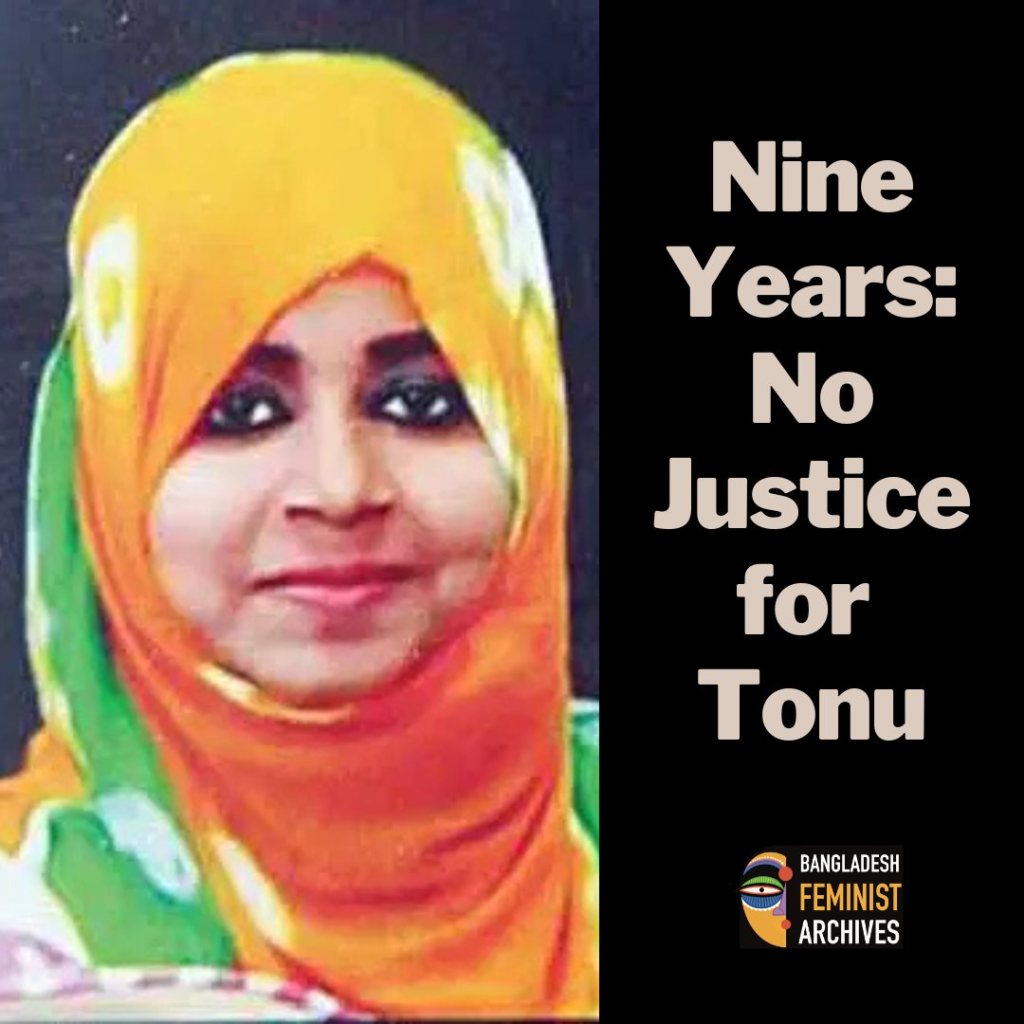
Sohagi Jahan Tonu, a 19-year-old college student and theater activist, was brutally murdered on March 20, 2016, in the Comilla Cantonment, Bangladesh. Her death sparked nationwide outrage, highlighting issues of gender-based violence and systemic inefficiencies in the Bangladeshi justice system. The incident took place in a highly secured military area, raising serious questions about how such a crime could occur in such a location.
The initial investigation faced significant challenges. The first autopsy report was inconclusive, failing to determine the cause of death, which led to widespread criticism and demands for further investigation. A second autopsy, conducted after public pressure, confirmed that Tonu had been raped before her murder. Despite this crucial evidence, the investigation has remained stagnant for years.
The case was handed over to the Police Bureau of Investigation (PBI) in 2020, raising hopes for progress. However, no arrests have been made, and the identity of the perpetrators remains unknown. The involvement of military personnel has been a topic of speculation due to the location of the crime, but no official statements or investigations have directly implicated anyone within the cantonment. This lack of accountability has fueled public frustration and criticism of the legal and investigative process in Bangladesh.
As of 2025, nearly nine years after the tragic incident, the case remains unresolved. Tonu’s family continues to demand justice, expressing their despair over the lack of progress. Human rights organizations and activists have highlighted the case as emblematic of the systemic issues within the Bangladeshi legal system, particularly concerning gender-based violence and impunity. The murder of Sohagi Jahan Tonu remains a symbol of the ongoing fight for justice and the need for systemic reform in Bangladesh.
 Bangladesh Feminist Archives