

Written by Tanveer Anoy
This is beyond outrageous. Instead of fixing the rampant sexual violence, the culture of impunity, and the flawed legal system, Bangladeshi authorities are more concerned with softening the word rape because it “sounds unpleasant.” What kind of twisted priorities are these? Survivors are fighting for justice, and the government’s response is to rebrand the crime as if that will make the reality any less horrific.
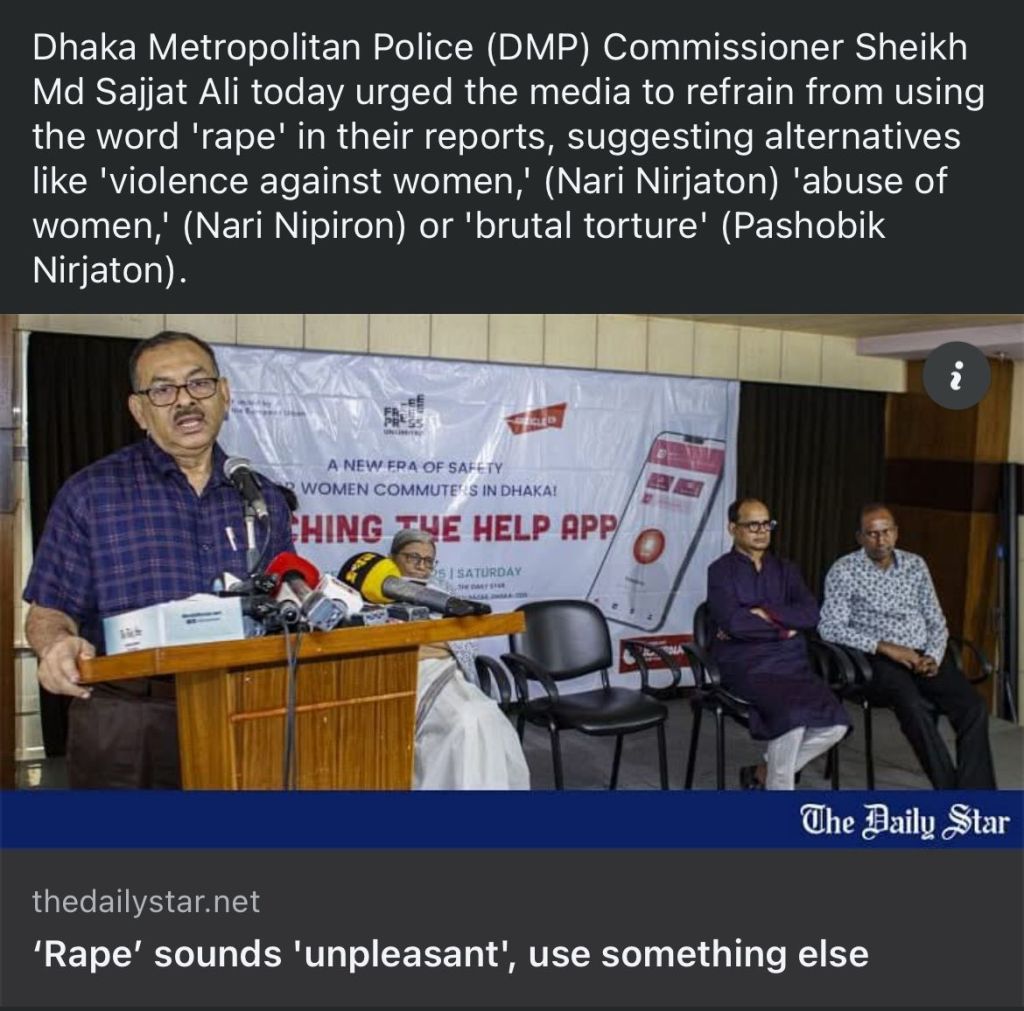
The problem isn’t the word, it’s the system that enables rapists and fails survivors. Every day, we hear new cases of sexual violence, yet the government refuses to take real action. This is the same country where gender minorities are erased from conversations about sexual violence. The law only recognizes rape as a crime against women, leaving entire communities without legal protection.
Bangladesh also refuses to acknowledge male rape victims. The recent case of a 20-year-old man raped in Narayanganj wasn’t even classified as rape; it was filed under “sodomy,” an outdated and derogatory term. Instead of ensuring justice, the system chooses legal loopholes that further stigmatize survivors and protect perpetrators.
And let’s not forget how survivors, regardless of gender, struggle to get justice due to police negligence, victim-blaming, and a legal system that prioritizes protecting rapists over supporting victims. The government’s attempt to sanitize the language around rape is nothing but another attempt to erase survivors and silence conversations about sexual violence.
This isn’t about words. It’s about power, control, and a refusal to address the real issue. Instead of tackling the rising cases of rape, making laws gender-inclusive, and ensuring all survivors receive justice, the government is playing semantics. This is erasure. This is gaslighting. This is an insult to every survivor who has fought for justice. Rape isn’t just an “unpleasant” word. It is a crime, a systemic issue, and a national crisis.
Changing terminology won’t change the reality of violence, but changing laws, holding perpetrators accountable, and dismantling the culture of impunity will. Instead of hiding behind language, it’s time the authorities actually did something.
 Bangladesh Feminist Archives