
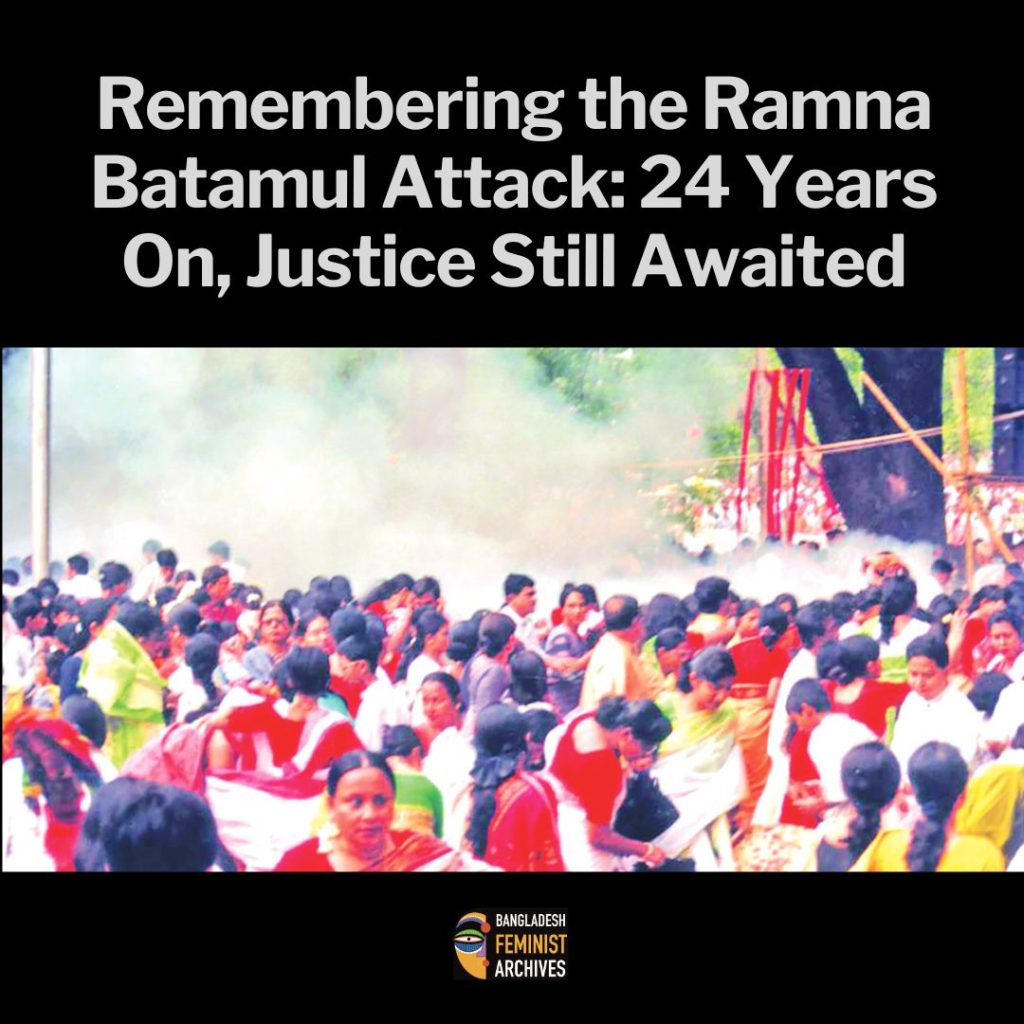
On April 14, 2001, during Pohela Boishakh celebrations at Ramna Batamul, organized by the cultural group Chhayanaut, a brutal bomb attack shook Bangladesh’s secular cultural core. Ten people were killed and over 50 injured when two bombs exploded amidst a crowd gathered to welcome the Bengali New Year.
The attack was carried out by Harkat-ul-Jihad al-Islami Bangladesh (HuJI-B), an Islamist militant group that claimed responsibility, targeting what they called “anti-Islamic” cultural expressions. In 2014, eight militants, including their leader Mufti Abdul Hannan, were sentenced to death, and six others received life imprisonment.
But justice has moved slowly. As of March 2025, while the High Court has completed hearings on the death references and appeals, the verdict is still pending, 24 years after the attack. Mufti Hannan was executed in 2017 for a separate incident, but justice for Ramna Batamul remains in limbo.
As this year’s Pohela Boishakh approaches, extremist groups have once again issued online threats targeting the Ramna Batamul celebration, including provocative calls to disrupt the event with communal violence. While some government officials have dismissed these as social media chatter, the memory of past attacks leaves many cautious. Ensuring safety for all cultural gatherings remains a critical concern.
The attack on Ramna Batamul was not just an attack on people; it was an attack on Bangladesh’s diverse cultural identity and collective joy. Feminist resistance must continue to center memory, mourning, and accountability. We remember the victims. We recognize the violence and we remember the silence that followed.
#NeverForgetRamna#PohelaBoishakh#FeministArchives#CulturalResistance#JusticeDelayed
 Bangladesh Feminist Archives