
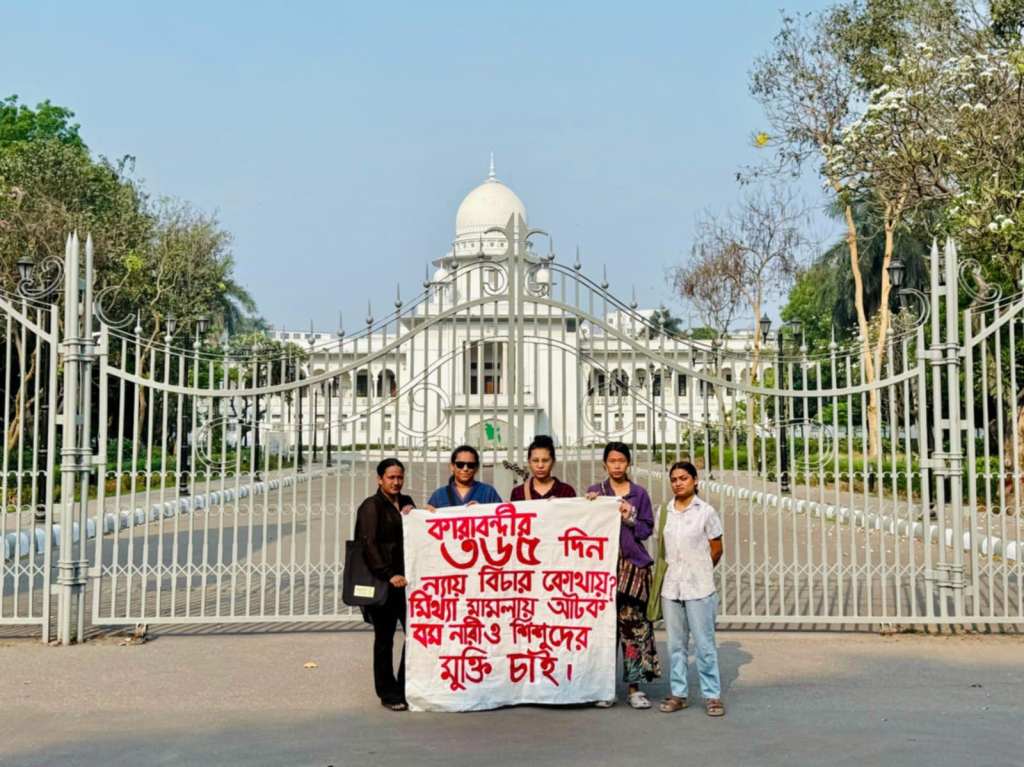
On April 8, 2024, a joint security operation was carried out in Bethel Para, a village in the Bawm-inhabited region of Bandarban. Residents report that announcements were made over loudspeakers from a military vehicle, instructing everyone not to flee and to gather at the village’s primary school field. After nearly four hours in the sun, a large number of villagers, including women, elderly individuals, and children, were detained and sent to jail.
A year later, 23 Bawm women aged between 17 and 50 remain imprisoned in Bandarban and Chattogram jails. They are being held under charges filed through the Special Powers Act, the Anti-Terrorism Act, and multiple sections of the Penal Code. At least 17 of the women have been charged in four separate cases each. In addition, four children, ranging in age from one and a half months to four years at the time of arrest, have been growing up in jail alongside their mothers.
One woman, reportedly eight months pregnant at the time of arrest, was released shortly before giving birth. Other bail applications, including those involving women with multiple children, have repeatedly been denied.
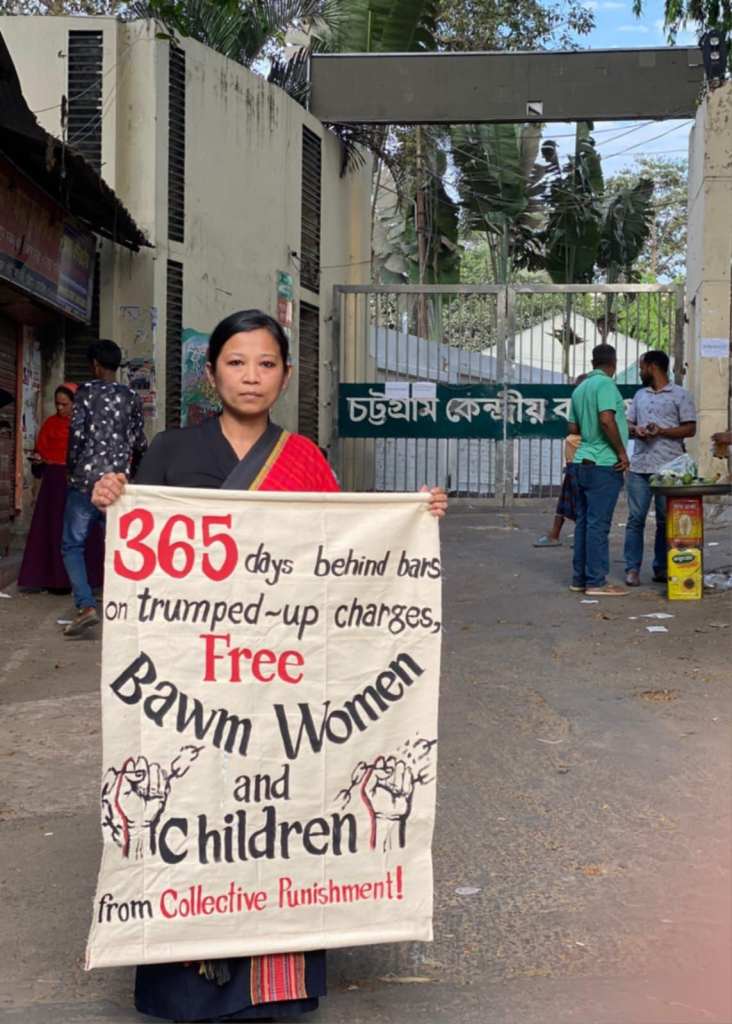
The arrests followed a reported bank robbery in Ruma upazila, allegedly carried out by members of the Kuki Chin National Front (KNF), an armed group active in the region. Rights groups and observers have raised concerns over what they describe as a pattern of collective punishment directed at the broader Bawm community, in the absence of individualized evidence or transparent legal proceedings.
While other high-profile individuals, including those previously convicted or accused under terrorism-related charges, have been released on bail or acquitted in the past year, the cases involving the Bawm women and children remain unresolved.
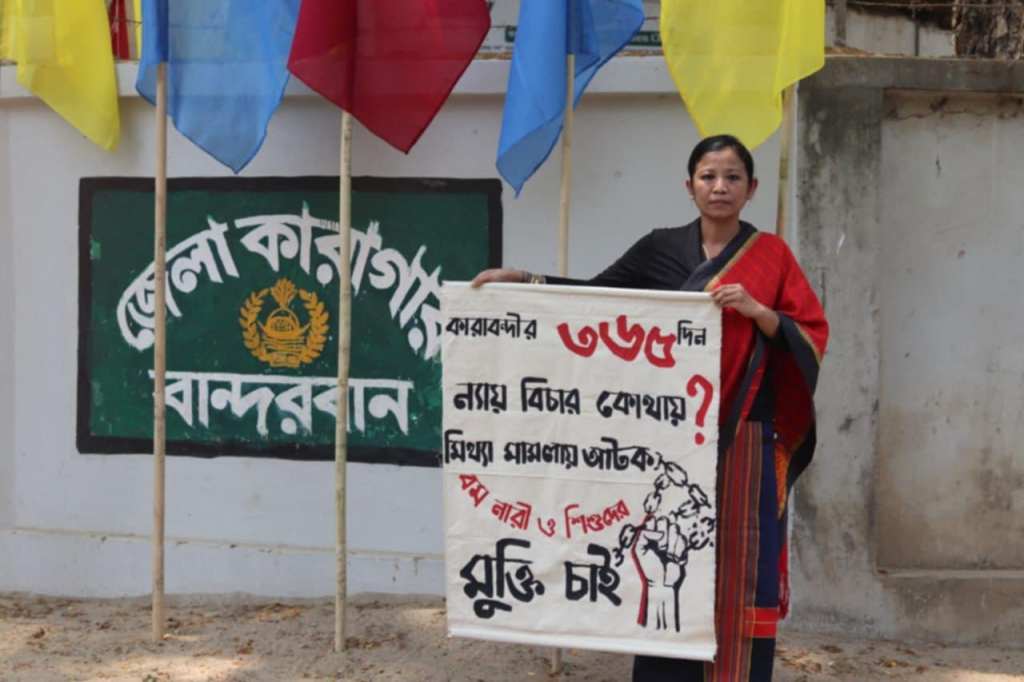
Despite the issue being brought to the attention of relevant government officials shortly after the interim government was formed in August 2024, no significant action has been taken to address the detentions.
News, Photo Source: Yan Yan, Paddmini Chakma
 Bangladesh Feminist Archives