
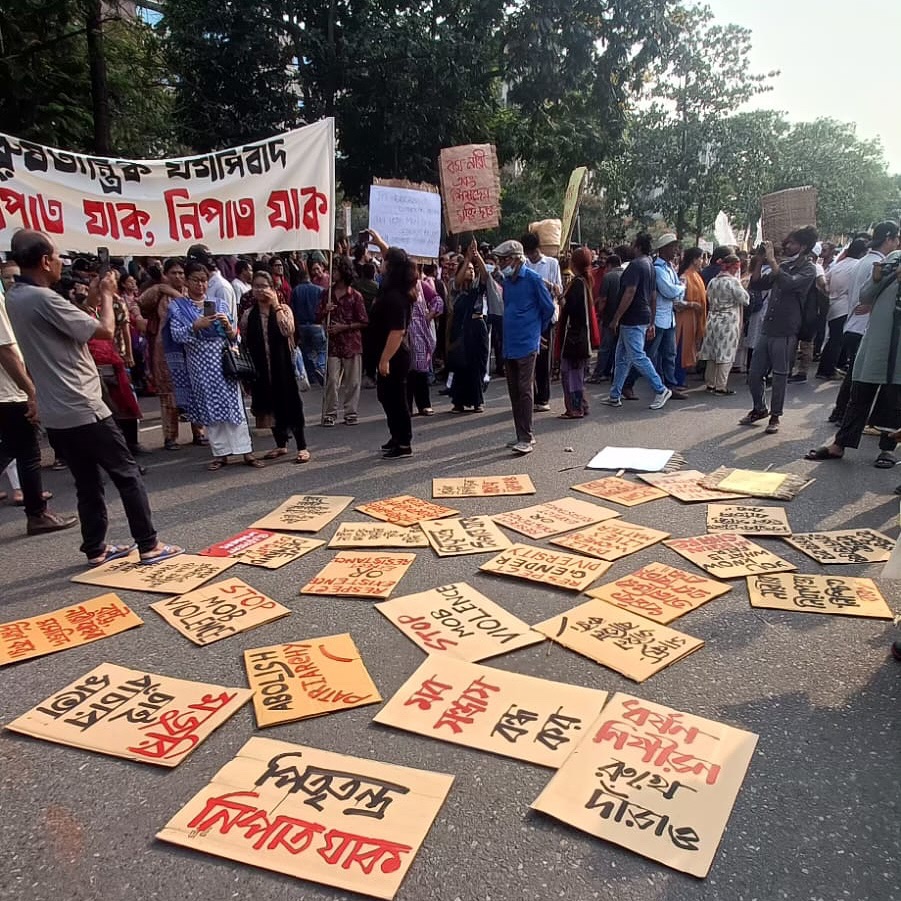
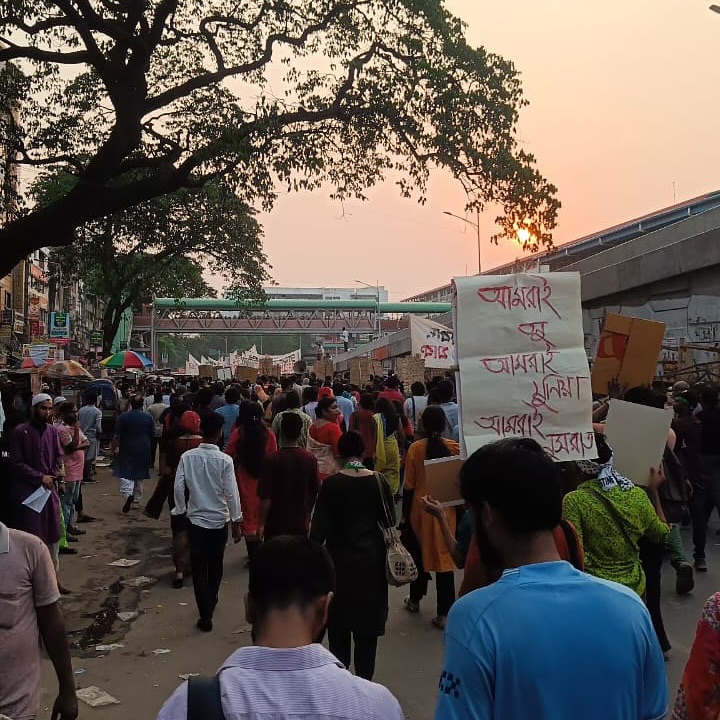
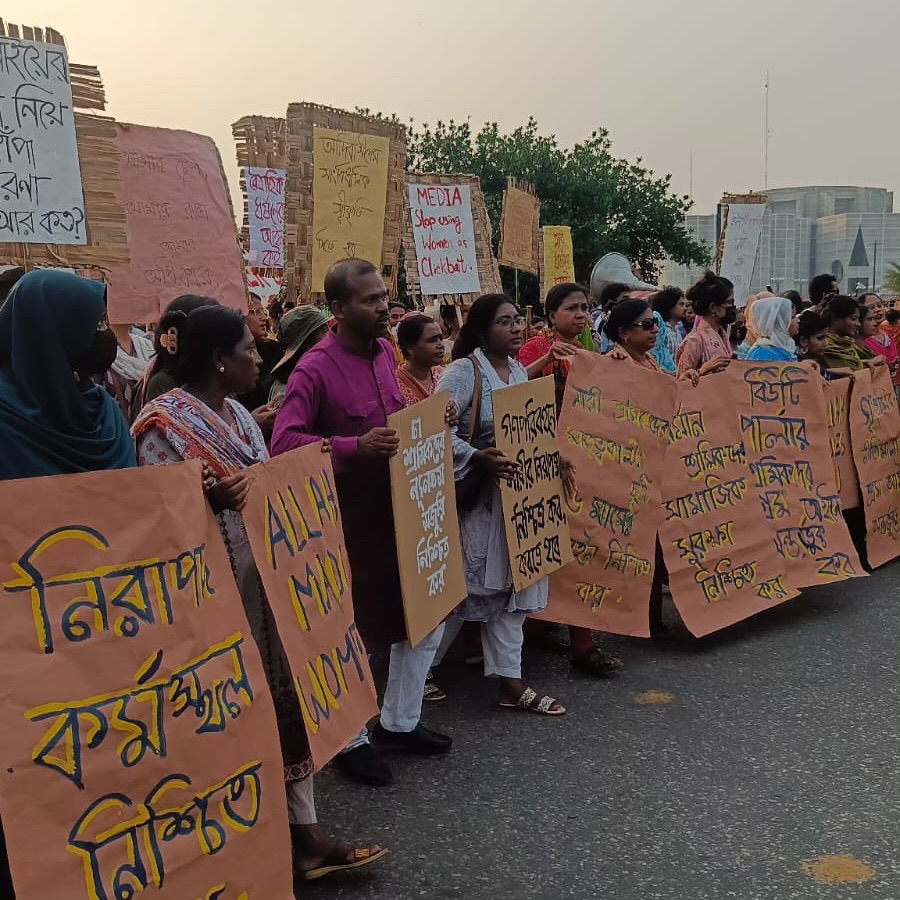
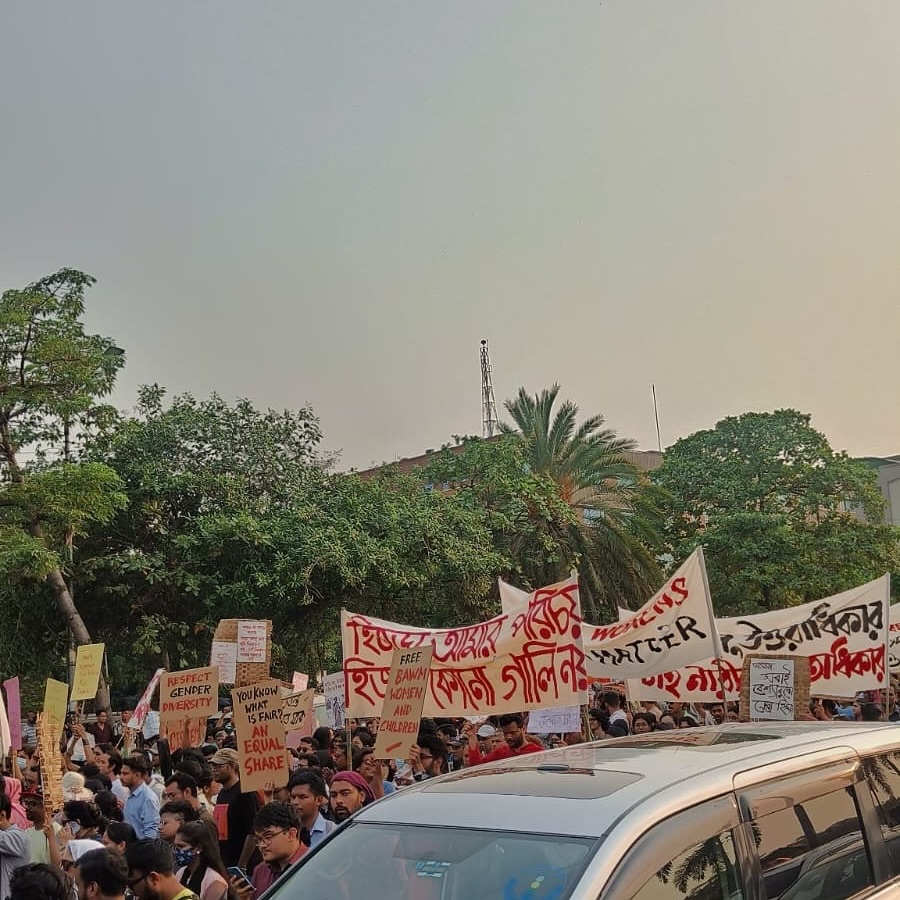
On Friday, May 16, thousands of women and gender-diverse people gathered in front of the Jatiya Sangsad Bhaban and took to the streets of Dhaka for the Women’s March for Solidarity. From garment workers and domestic staff to Indigenous women, Dalit leaders, students, teachers, sex workers, and members of the Hijra and gender-diverse communities, the crowd reflected the diverse and intersectional struggles that define Bangladesh’s ongoing fight for justice.
The march raised urgent demands in the face of rising threats, harassment, and misinformation, particularly the organized campaign against the Women’s Affairs Reform Commission. Participants called for political parties to take clear positions on the rights of women, workers, and minoritized communities, and demanded a mandatory 33% representation of women in the upcoming elections.
A declaration read aloud during the program emphasized that rights must be claimed, not begged for a line that echoed throughout the crowd: “Rights are not granted; they must be claimed and we are not afraid to claim them.” The declaration also criticized the silence of the interim government in the face of attacks on its own appointed commission members and underscored the urgent need for legal and institutional reforms, including unified family laws, fair wages, union rights, and civic protections for all marginalized groups.
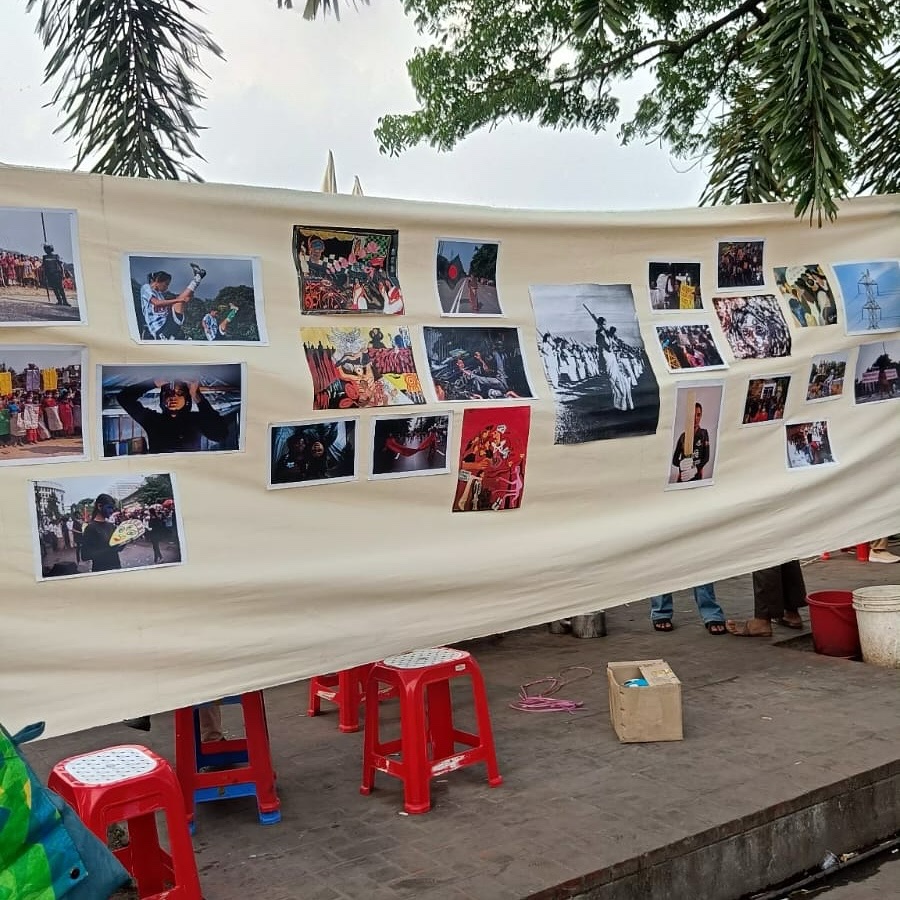
The program began with a chorus of the national anthem and was followed by music, poetry, and theatrical performances drawn from various traditions. Marchers carried placards, hand-painted fans, and banners that spoke to shared struggles from labor rights and land access to bodily autonomy, education, and solidarity with Palestine.
What unfolded was more than a protest; it was a reclamation of voice, space, and future.
 Bangladesh Feminist Archives