
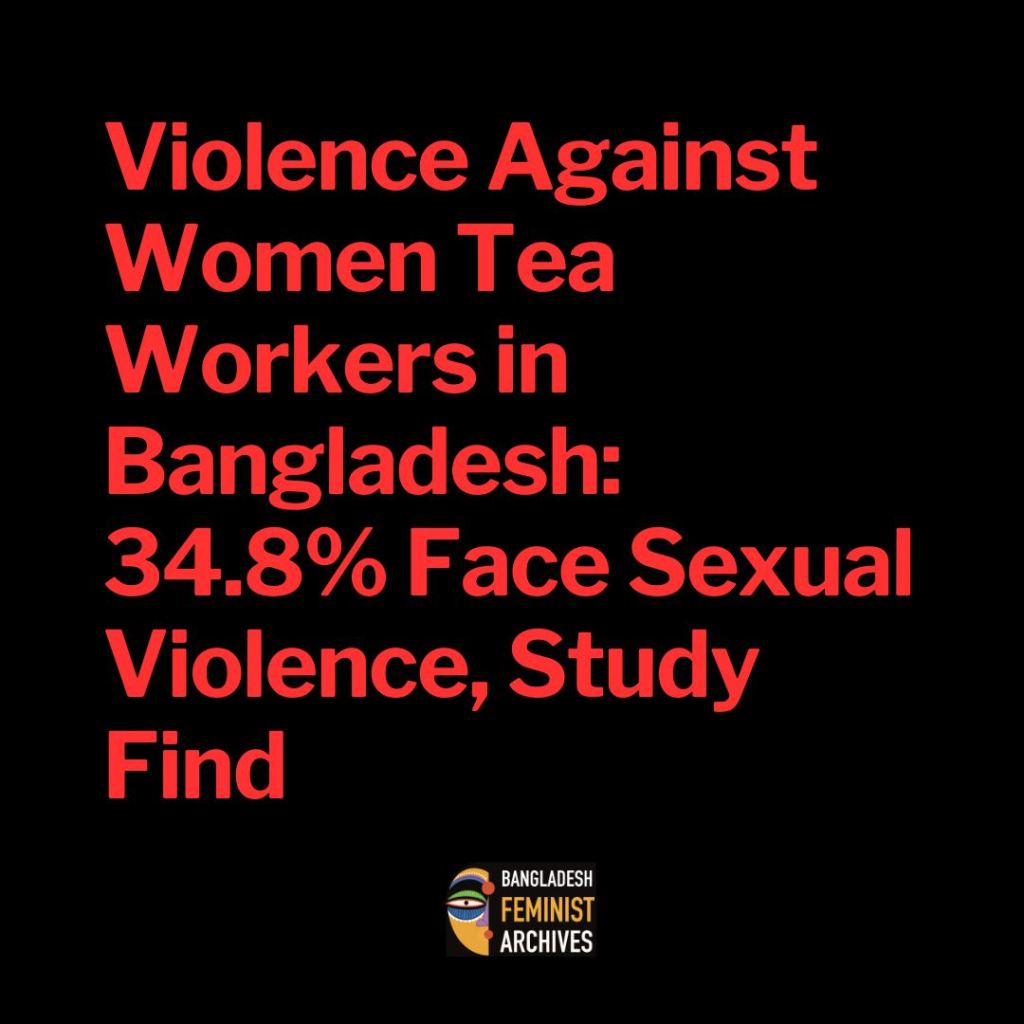
A recent study titled “Women Tea Workers’ Rights, Access to Services: Reality and Legal Context” has revealed alarming rates of sexual and gender-based violence among women workers in Bangladesh’s tea gardens. Conducted by Innovative Research and Consultancy (IRC) under the ‘Strengthening Women’s Voices in Tea Gardens’ project by Breaking the Silence and Oxfam in Bangladesh, the study surveyed more than 300 women workers across 11 upazilas in Sylhet division. It found that 34.8% of women workers face sexual violence at work, 30% endure verbal abuse, and 14% experience physical violence, including domestic abuse. Additionally, nearly a quarter (24.3%) of respondents do not feel their workplace is safe, citing violence, threats from owners, and uncertainty about the future as major concerns.
The study further detailed the forms of abuse faced by women workers. Of the 23 workers who shared specific experiences, 95.7% reported facing obscene or insulting language and gestures, 30.4% encountered unwanted physical contact, and over a quarter reported direct sexual harassment and intimidation. While 37.7% of the women surveyed said they had protested these abuses, the lack of institutional support remains a serious issue.
In addition to highlighting these abuses, the study presented a comparative legal analysis of protections for tea garden women workers in countries like India, Kenya, Indonesia, Sri Lanka, and China. It revealed that Bangladeshi tea workers continue to suffer from low wages, wage discrimination, arrears, inadequate housing, poor education and sanitation, limited access to safe water, and lack of leave benefits.
Several recommendations emerged from the study, including increasing women’s leadership roles in unions, providing legal aid and skills training, enhancing awareness and social protections, and formally recognizing housing rights. Legal action against forced evictions and policy reforms were also emphasized as urgent needs. The findings were shared at a view-exchange event in Dhaka on May 22, attended by tea workers and representatives from government, NGOs, and labor institutions.
Source: Prothom Alo
Report Date: 22 May 2025
 Bangladesh Feminist Archives