
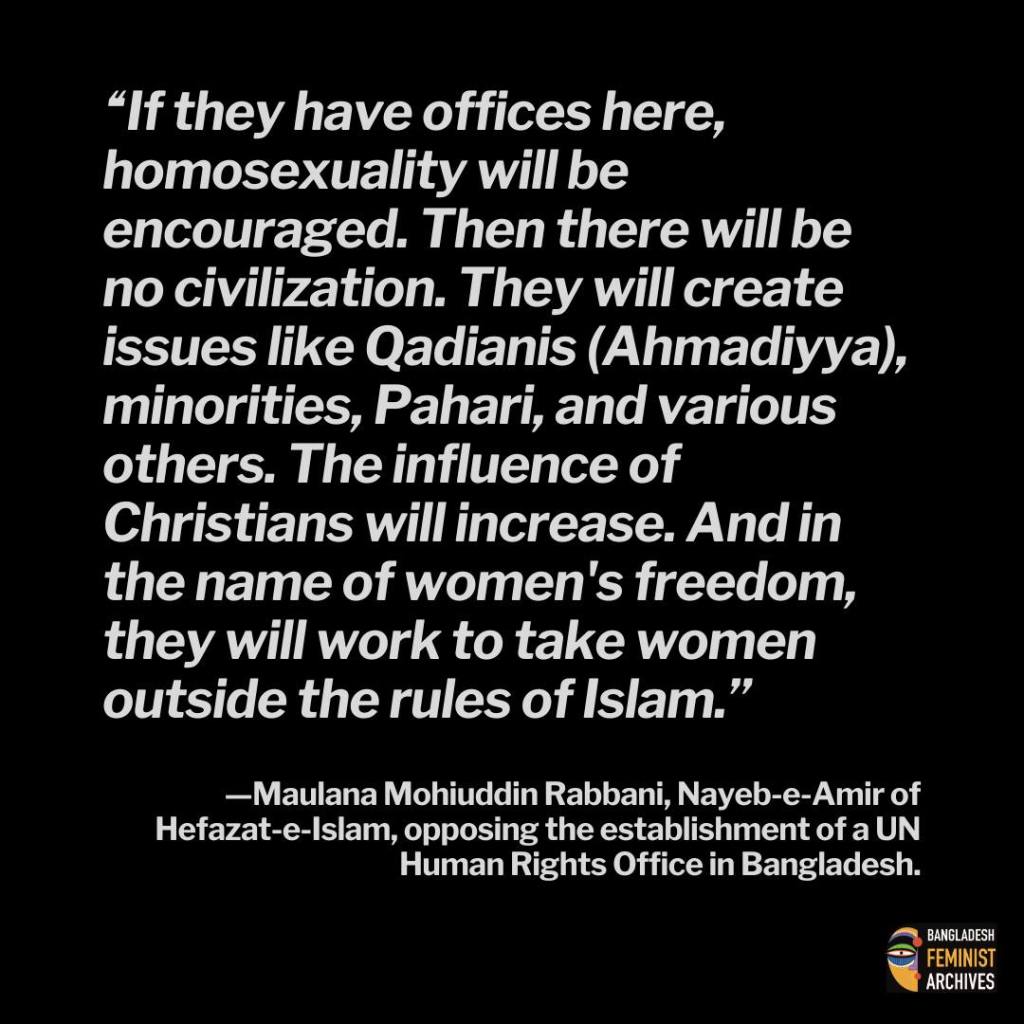
Backlash Grows Over UN Human Rights Office in Bangladesh
Despite the interim government’s in-principle approval to establish a United Nations Office of the High Commissioner for Human Rights (OHCHR) in Dhaka, several political and religious groups have voiced strong opposition.
On June 29, Legal Adviser Dr. Asif Nazrul confirmed that the interim government had approved a draft Memorandum of Understanding (MoU) allowing a temporary OHCHR office to operate for three years, with a review after two. The move followed months of diplomatic engagement and a recent statement by UN Human Rights Chief Volker Türk, who emphasized Bangladesh as a focus area.
Opposition came quickly. Hefazat-e-Islam, known for its hardline Islamist stance, rejected the plan outright, framing it as a threat to Bangladesh’s cultural and religious values. The group also formed a committee to evaluate OHCHR’s performance in other countries, claiming such offices have failed elsewhere, including in Gaza and Africa.
The backlash wasn’t limited to religious groups. Leftist parties like the Communist Party of Bangladesh (CPB) also opposed the plan, albeit for different reasons. CPB Secretary Ruhin Hossain Prince argued that the UN’s human rights offices historically reflect imperialist interests and criticized the lack of public discussion around the MoU’s terms.
Meanwhile, human rights defenders and civil society groups welcomed the move. Nur Khan, a member of the government’s commission on enforced disappearances, said the office would help raise international awareness of rights violations and strengthen advocacy. Women’s rights leader Shireen Huq added that the office could foster a stronger human rights culture and greater accountability.
Though BNP has not released an official statement, leaders have privately welcomed the decision. Government representatives maintain that the move serves the national interest and reflects a commitment to human rights.
Source: Deutsche Welle (DW)
 Bangladesh Feminist Archives