
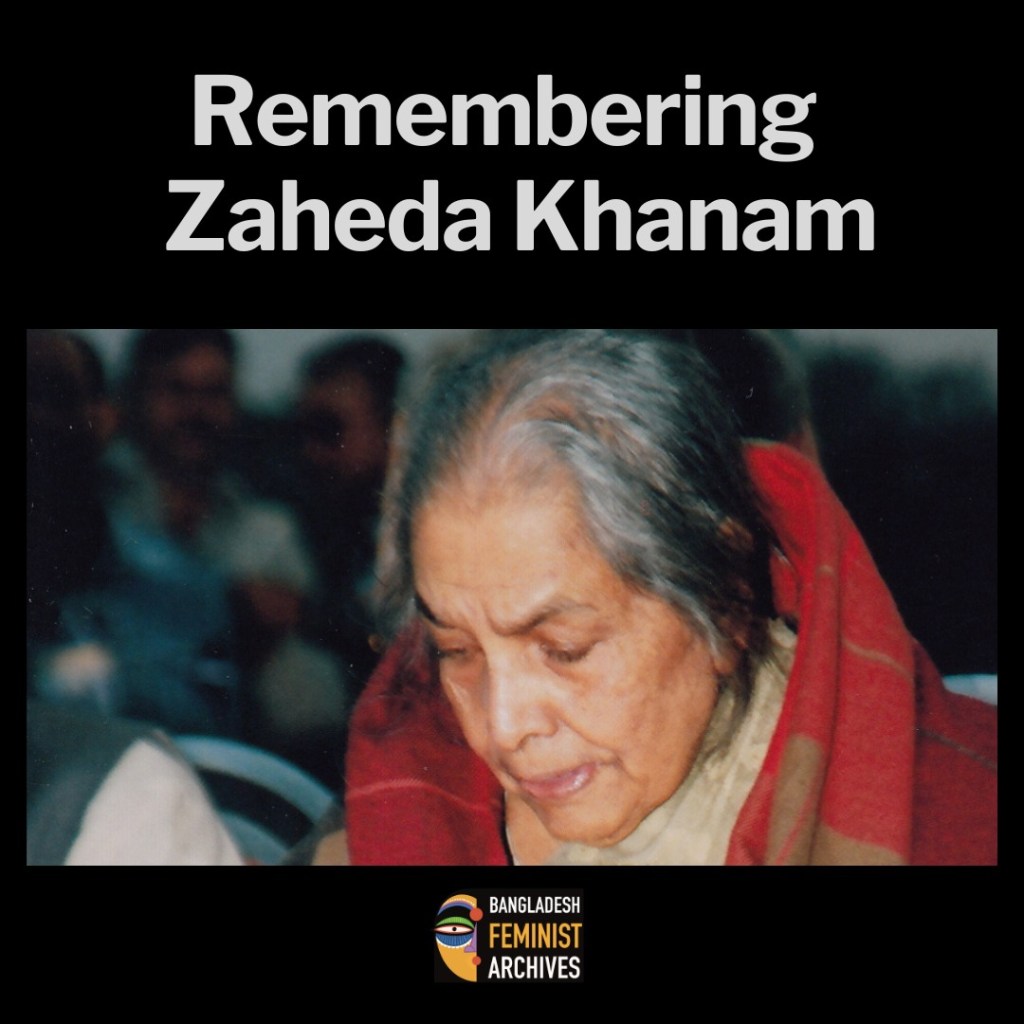
Zaheda Khanam (July 7, 1923 – 2011) was a poet, translator, and lifelong learner whose life defied the expectations placed on women in 20th-century Bengal. Born in Bijeshwar village near Brahmanbaria, she married at sixteen but resumed her education ten years later, passing her matriculation in 1948 and earning both her BA and MA in Bengali literature from Dhaka University in the 1960s, while raising a family.
Though she began writing poetry in childhood, family responsibilities halted her creative work for decades. She returned to writing in her later years, publishing books like Eka Ae Shunna Prantore and several children’s rhyme collections. At age 70, she taught herself Sanskrit and translated Kalidasa’s Meghadutam into Bengali, a work later recognized by the Government of West Bengal. She was also working on Abhijnanashakuntalam at the time of her death.
Zaheda Khanam’s home was open to all, relatives, the poor, political figures, creating a space rooted in equality, inclusion, and care. A widow at a young age, she managed her husband’s construction business, raised her children with feminist values, and maintained a deep love for learning, literature, and justice.
Her daughters, Shireen Huq and Nasreen Huq, became leading feminist activists in Bangladesh, continuing her legacy of resistance and care. Zaheda Khanam’s life reminds us that feminist lives often unfold quietly, in study, in survival, and in nurturing the next generation to dream bolder.
 Bangladesh Feminist Archives