
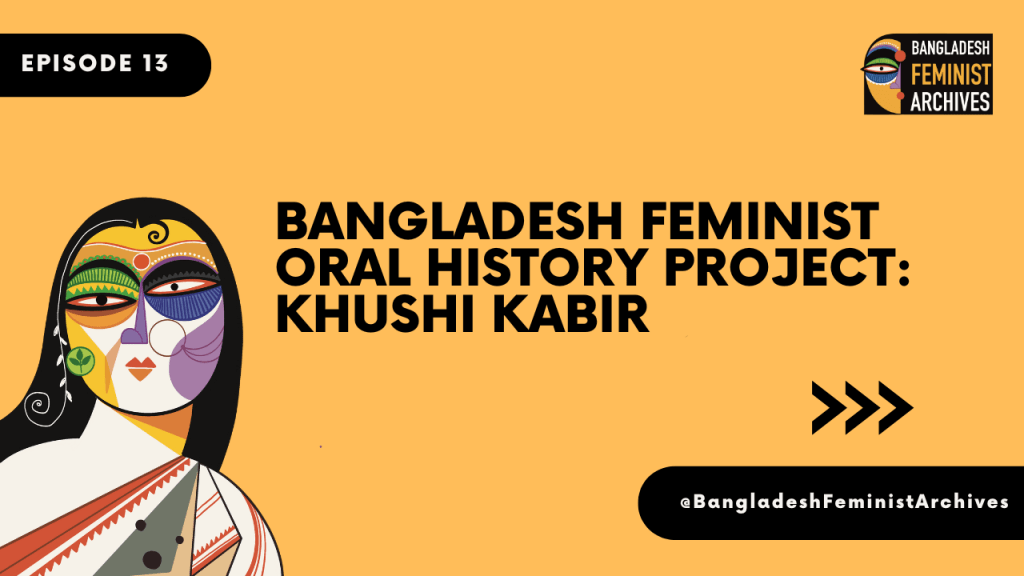
We are honored to present Episode 13 of the Bangladesh Feminist Oral History Project, an initiative of the Bangladesh Feminist Archives dedicated to documenting the voices, struggles, and legacies of Bangladeshi feminists across generations.
In this powerful episode, we speak with Khushi Kabir, a veteran feminist, activist, organizer, and lifelong advocate for social and gender justice in Bangladesh. With over four decades of experience working at the intersection of rural empowerment, Indigenous and Adivasi rights, secularism, and feminist organizing, Khushi Kabir has been a vital part of shaping the progressive movement in Bangladesh.
As the Coordinator of Nijera Kori, one of the country’s most influential rights-based organizations, and a former Member of the UN Committee on the Elimination of Discrimination against Women (CEDAW), her work has pushed boundaries, challenged power, and nurtured generations of movement builders. In this interview, she reflects on her life’s work, from the aftermath of 1971 to current struggles, and what it means to stay grounded in justice, memory, and collective care.
Topics Discussed:
-Her political awakening and journey into feminist activism
-Building Nijera Kori and working with rural and marginalized communities
-Navigating state violence, religious nationalism, and movement repression
-Transnational solidarity, feminist ethics, and NGO-ization
-What sustains feminist organizing over decades
About the Project:
The Bangladesh Feminist Oral History Project is a living archive of interviews with Bangladeshi feminists, activists, artists, organizers, and researchers, whose stories offer insight, courage, and memory. Hosted by the Bangladesh Feminist Archives.
Join the Conversation:
What resonated with you in this episode? Comment, share, and help us keep feminist stories alive.
#KhushiKabir #BangladeshFeministArchives #FeministOralHistory #NijeraKori #FeministMovement #FeministLegacy #CEDAW #GenderJustice #AdivasiRights #FeministSolidarity #IntersectionalFeminism #BangladeshFeminism
 Bangladesh Feminist Archives