
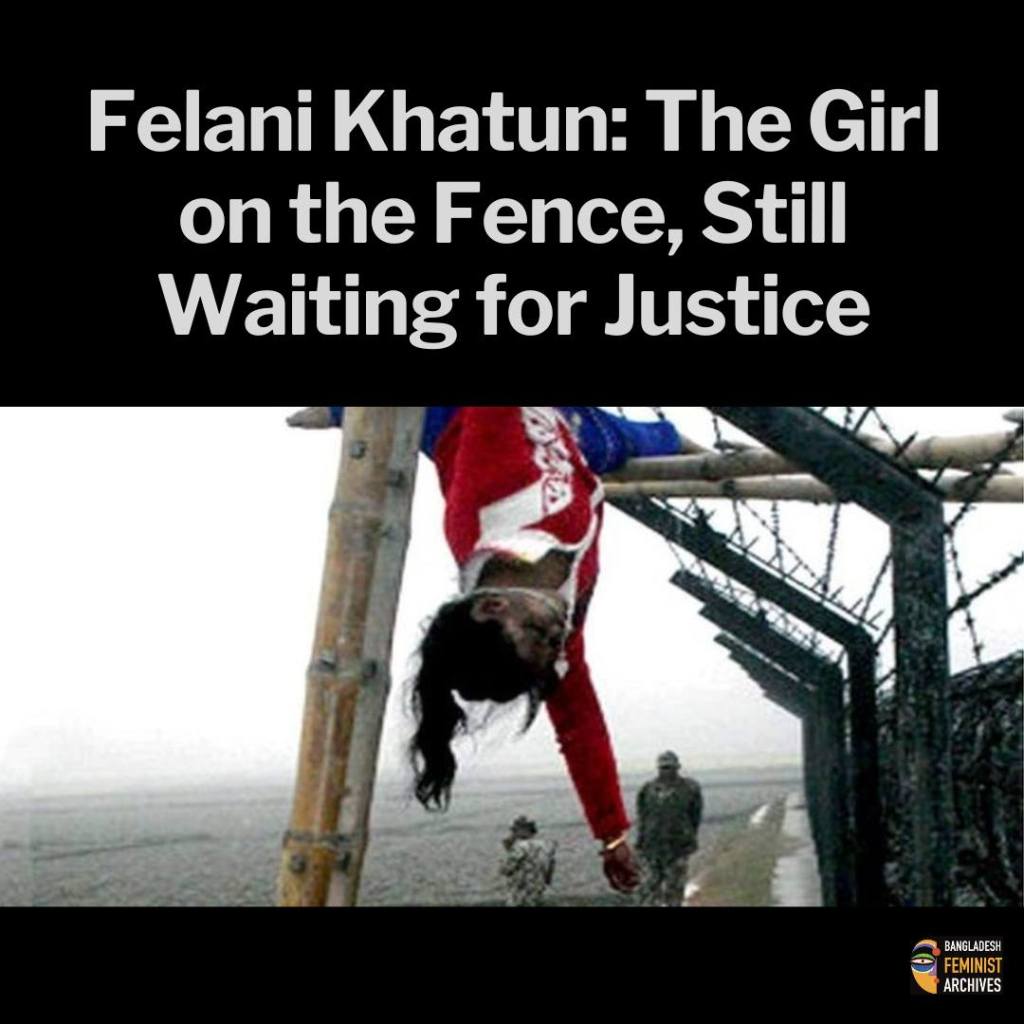
On January 7, 2011, 15-year-old Felani Khatun was shot dead by India’s Border Security Force (BSF) while crossing the Anantapur border in Kurigram with her father. She was returning from Assam for her marriage when BSF soldiers opened fire. Her body was left hanging from the barbed-wire fence for hours. That haunting image became one of the starkest symbols of violence at the Bangladesh–India border and sparked international outrage.
Yet more than a decade later, justice has been denied. BSF constable Amiya Ghosh, accused of firing the shot, was acquitted twice by Indian military courts in 2013 and 2015, despite eyewitness testimony and photographs. Felani’s parents, Nur Islam and Jahanara Begum, fought tirelessly, but each acquittal deepened their grief. Her case remains a symbol of impunity at the border, where hundreds of Bangladeshi men, women, and children have been killed over the years.
On her 14th death anniversary in January 2025, rights groups once again held rallies demanding an end to border killings and recognition of the vulnerability of undocumented migrants. Felani’s story is invoked again and again in protests, vigils, and human rights campaigns, a reminder of the lives reduced to collateral in the politics of security and territory.
A brief timeline tells the story of injustice:
• 2011 — Felani killed at Anantapur border
• 2013 — First trial, acquittal of accused
• 2015 — Retrial, acquittal upheld
• 2021 — New petitions filed by family
• 2025 — Her brother Arfan Hossain joins Border Guard Bangladesh, vowing to serve at the very frontier where his sister was killed
Felani was only 15. Her name lives on as more than a victim , she represents resistance against violence, impunity, and borders that steal futures. Her memory continues to demand justice, accountability, and dignity.
 Bangladesh Feminist Archives