
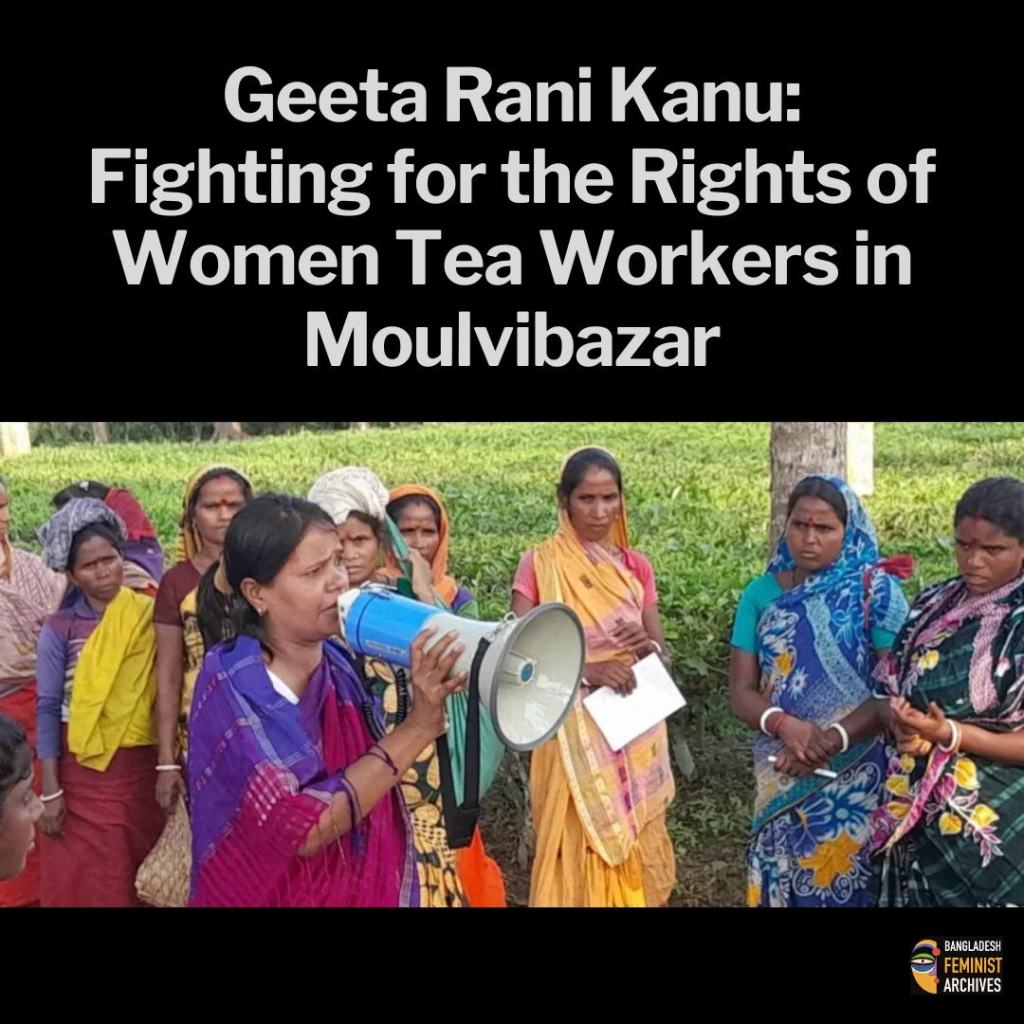
All over Bangladesh’s tea gardens, it is women who drive the industry — plucking, sorting, and processing the leaves that sustain a major export economy. Yet despite their labor, tea workers remain among the most underpaid and marginalized communities in the country. Highlighting this injustice, Geeta Rani Kanu, a resident of Islampur Union in Kamalganj upazila of Moulvibazar, has dedicated her life to improving the conditions of women tea workers through activism, organizing, and social work.
A member of the tea worker community herself, Geeta founded the Bangladesh Tea-Sramik Women Forum, which now includes over 5,000 women. Through this platform, she provides training on workers’ rights, leadership, and self-reliant employment initiatives. She has also stood beside women during illness and crises, offering support and advocating for fair wages, housing, and healthcare. “I saw my father secretly bringing food to the starving, and my mother turning to politics to fight for women’s rights. Their actions shaped who I am,” she said.
Geeta has been involved in local politics for over a decade, contesting in union and upazila elections to raise women’s voices. Although she faced obstacles and conspiracies during her campaigns in 2014 and 2024, she remained undeterred. Earlier, in 2007–2008, she led strikes to secure food rations for women tea workers, and in 2018, she became the first elected secretary of the Bangladesh Tea Workers’ Organization.
Reflecting on her work, Geeta said, “Big industries have profited in the name of tea, but this sector is built on the flesh and blood of workers. We cannot remain empty-handed forever.” She plans to run again in future elections and aims to create employment opportunities for women in weaving and cottage industries. “I cannot turn away from the cries of my people,” she said. “I will continue this struggle until women tea workers get the dignity and justice they deserve.”
 Bangladesh Feminist Archives