
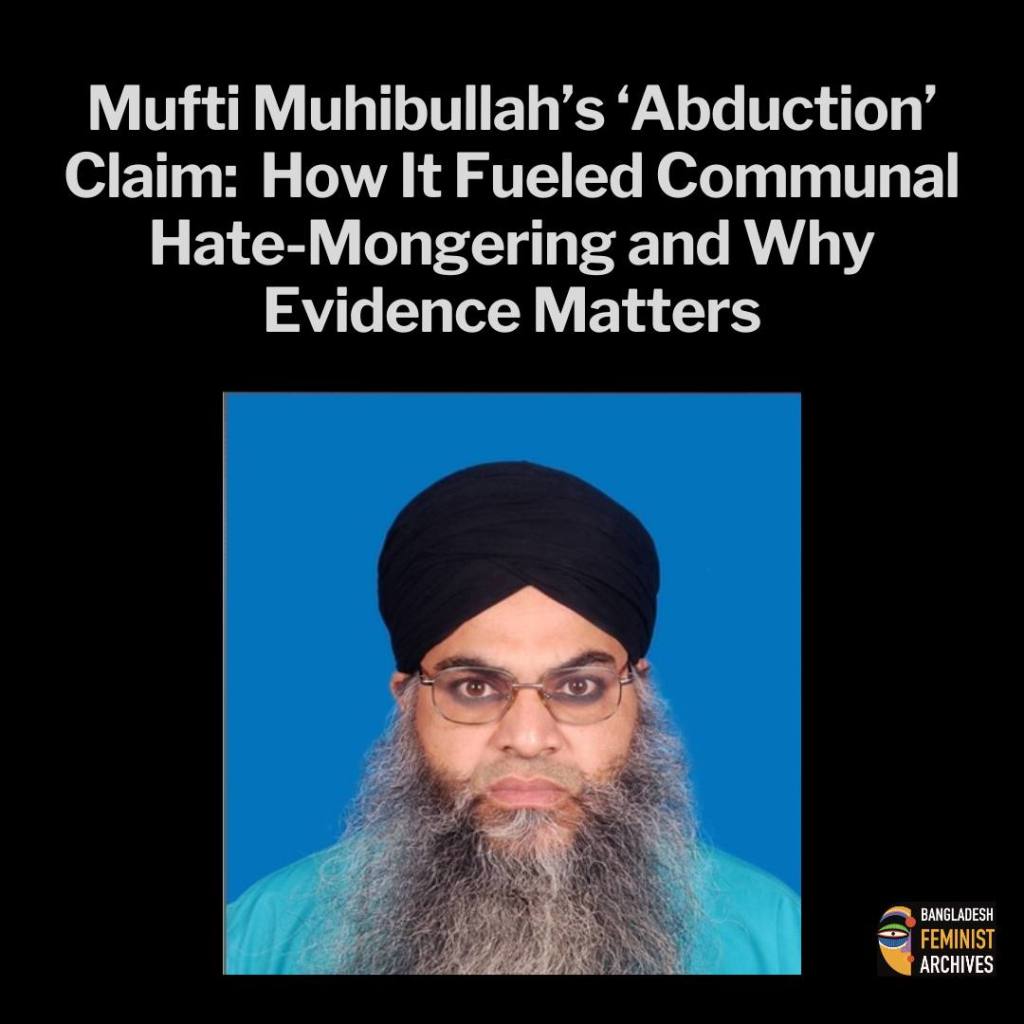
But evidence now contradicts this rapid narrative. Police investigations and CCTV footage show Muhibullah walking alone along the route where he claimed to have been abducted, with no ambulance or assailants visible. Phone-tracking data also found no link between ISKCON or any organised group and the incident. Law enforcement has urged the public to avoid speculation while the probe continues.
But evidence now contradicts this rapid narrative. Police investigations and CCTV footage show Muhibullah walking alone along the route where he claimed to have been abducted — with no ambulance or assailants visible. Phone-tracking data also found no link between ISKCON or any organised group and the incident. Law enforcement has urged the public to avoid speculation while the probe continues.
This gap between claim and proof created fertile ground for hate-mongering. Unverified allegations circulated as certainties; local influencers amplified them; and rumours hardened into collective hostility. The result: reputational damage for those falsely accused and a spike in communal tension while investigators were still uncovering facts.
Beyond the specific case, this episode exposes a dangerous pattern, how emotionally charged, unverified claims can be weaponised to inflame divisions. Responsible reporting and community restraint are vital. Journalists and citizens alike must pause before sharing material that could endanger others or deepen interfaith mistrust. Police say they will brief the public once the inquiry concludes.
The takeaway is clear: demand evidence, not outrage. If Muhibullah’s claim proves true, perpetrators must face justice. If false, those spreading deliberate misinformation must be held accountable for sowing communal fear. Only evidence-based reporting and transparent investigation can prevent a personal story, real or fabricated, from erupting into collective violence.
 Bangladesh Feminist Archives