
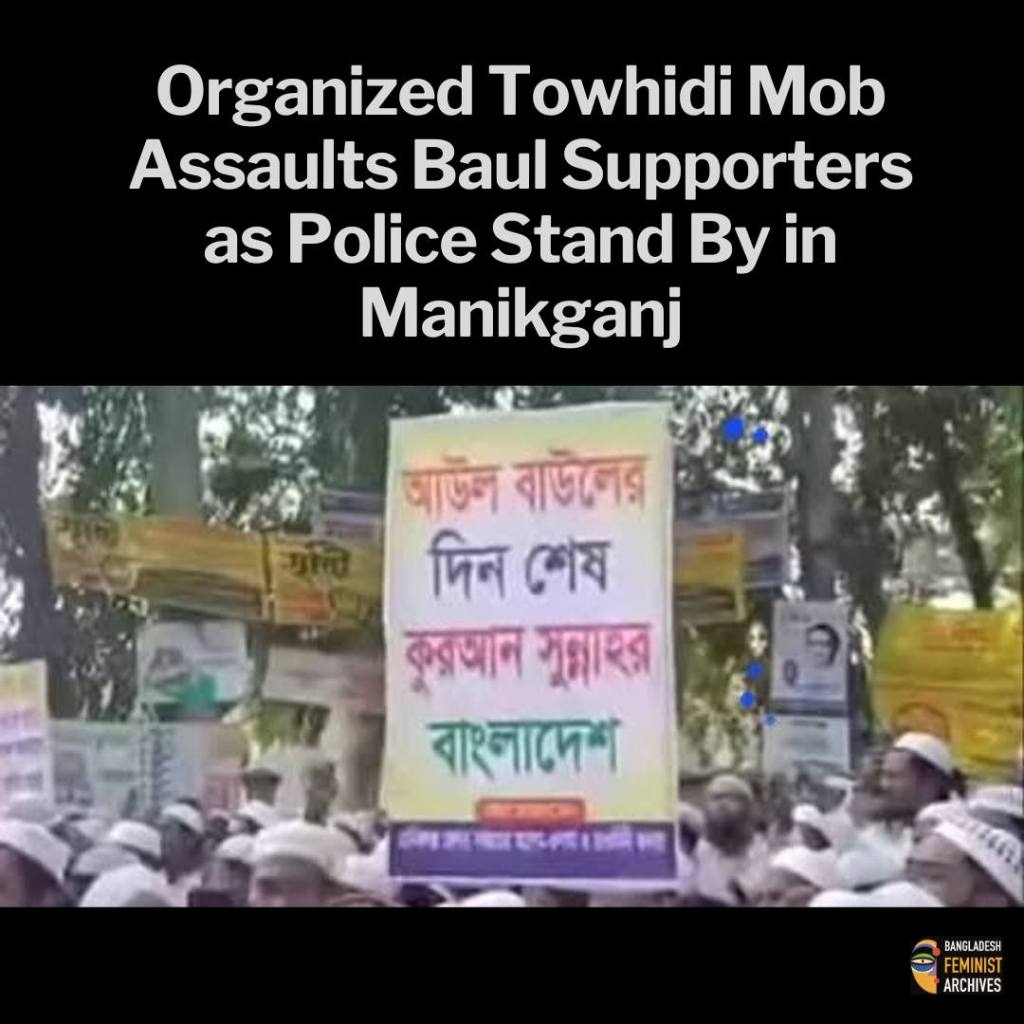
A coordinated attack by Towhidi hardline activists left several Baul devotees injured in Manikganj on Sunday morning, intensifying concerns about the state’s inability—or unwillingness—to curb organized religious extremism. Around 10 a.m., a procession under the banner of “All levels of scholars and ulamas of Manikganj district and Towhidi people” marched through the town demanding the “maximum punishment” for Baul artist Abul Sarkar.
At the same time, Abul Sarkar’s supporters were preparing a peaceful human chain at the Manikganj Press Club. Police, fearing tension with the Towhidi group, ordered them to leave. Forced out, they moved near the central Shaheed Minar in South Seota—only five to six hundred yards from the much larger Towhidi gathering.
Eyewitnesses said a faction of the Towhidi procession suddenly broke away, shouting threats like “Catch every Baul, slaughter them one by one,” before attacking the Baul devotees with sticks and bricks. Three Baul followers from Shivaloy, Singair, and Harirampur suffered deep head injuries and required stitches. One Towhidi participant was also injured. All were taken to the district hospital.
According to the Baul devotees, police were present but did nothing to stop the attack. Viral videos show the attackers clearly visible—throwing bricks, wielding sticks, and chanting threats—yet no arrests have been made. This lack of action, despite video evidence and police presence, has intensified criticism. Locals are asking: “If extremists can attack people in front of police cameras with no consequences, who does the law protect?”
Baul artist Raju Sarkar said the Baul community wants peace and continues to demand Abul Sarkar’s release. Abul was detained by the DB on November 19, following allegations of religious insult at a Palagan event on November 4. A cleric filed a case the next day, and he was sent to jail. While Baul supporters continue peaceful human chains across districts, police restrictions on their gatherings—and unchecked extremist violence—have deepened fears that hardline Towhidi groups are exerting more power on the ground than the state.
 Bangladesh Feminist Archives