
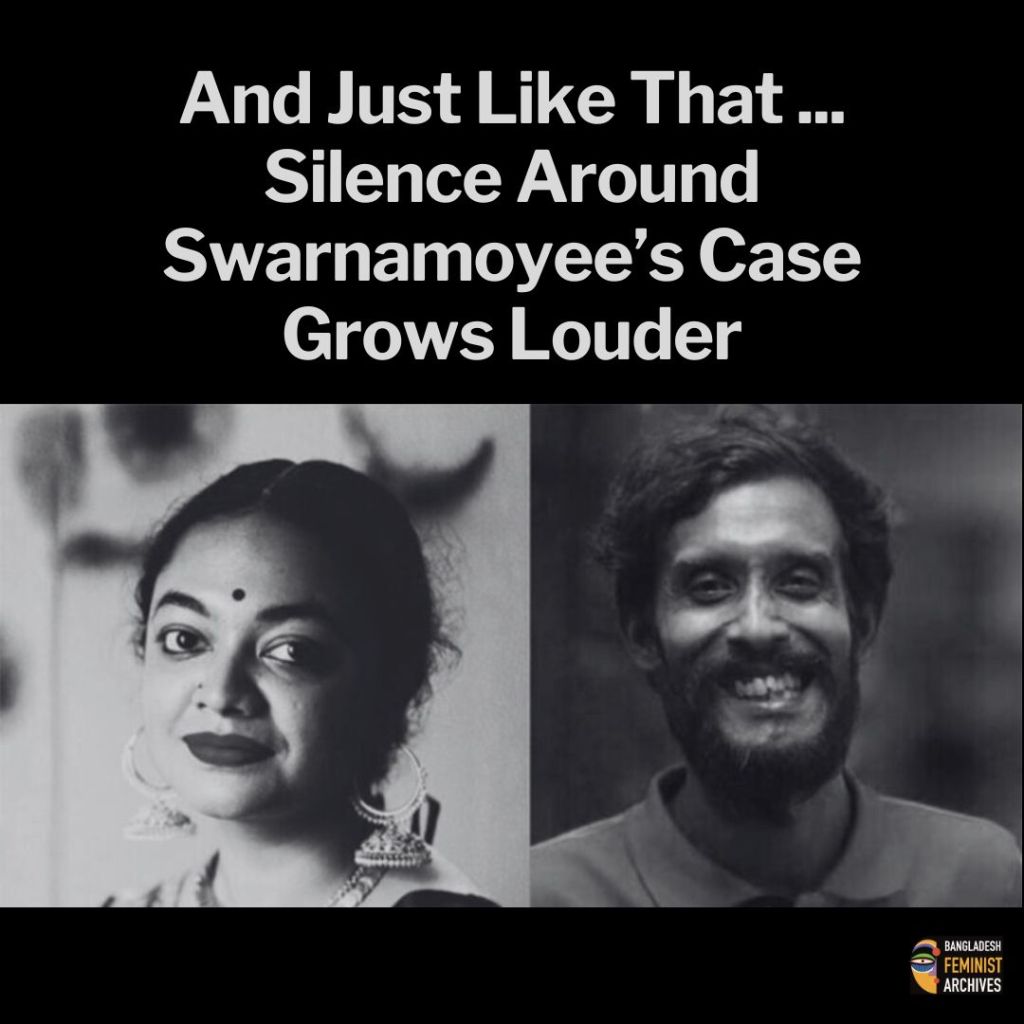
On October 18, 2025, 28-year-old Swarnamoyee Biswas, a junior graphic designer at Dhaka Stream, was found dead in her Dhanmondi apartment. Police initially recorded the death as a suspected suicide. Her colleagues and peers, however, have pointed to months of unresolved workplace harassment complaints that preceded her death.
On July 13, 2025, Swarnamoyee and about twenty-six colleagues lodged a formal written complaint against senior editor Altaf Shahnewaz, accusing him of sexual harassment, verbal abuse, intimidation, and professional misconduct. Following that complaint, Dhaka Stream formed a two-member inquiry committee and temporarily removed Shahnewaz from direct newsroom contact, according to the organization’s own statement.
Since then, no official findings from that committee have been released publicly. There has been no police update, no visible institutional follow-up, and no confirmation of any disciplinary or legal outcome. In the days following her death, 243 prominent citizens, including journalists, writers, and human rights defenders, issued a joint statement demanding an independent investigation into both Swarnamoyee’s death and the handling of the workplace complaint, citing Bangladesh’s High Court 2009 guidelines on preventing sexual harassment.
As of now, nearly all media reports stop at the initial details. No further progress has been documented, either by Dhaka Stream, law enforcement agencies, or other relevant authorities. What remains is silence: no answers for the complainants, no closure for her colleagues, and no systemic accountability for what she endured.
In the absence of updates, public attention has drifted elsewhere, and Swarnamoyee’s name, once the center of national discussion about harassment in media workplaces, is now rarely mentioned. The stagnation of this case stands as a reminder of how easily stories of women’s pain in professional spaces are absorbed, forgotten, and left without justice.
 Bangladesh Feminist Archives