
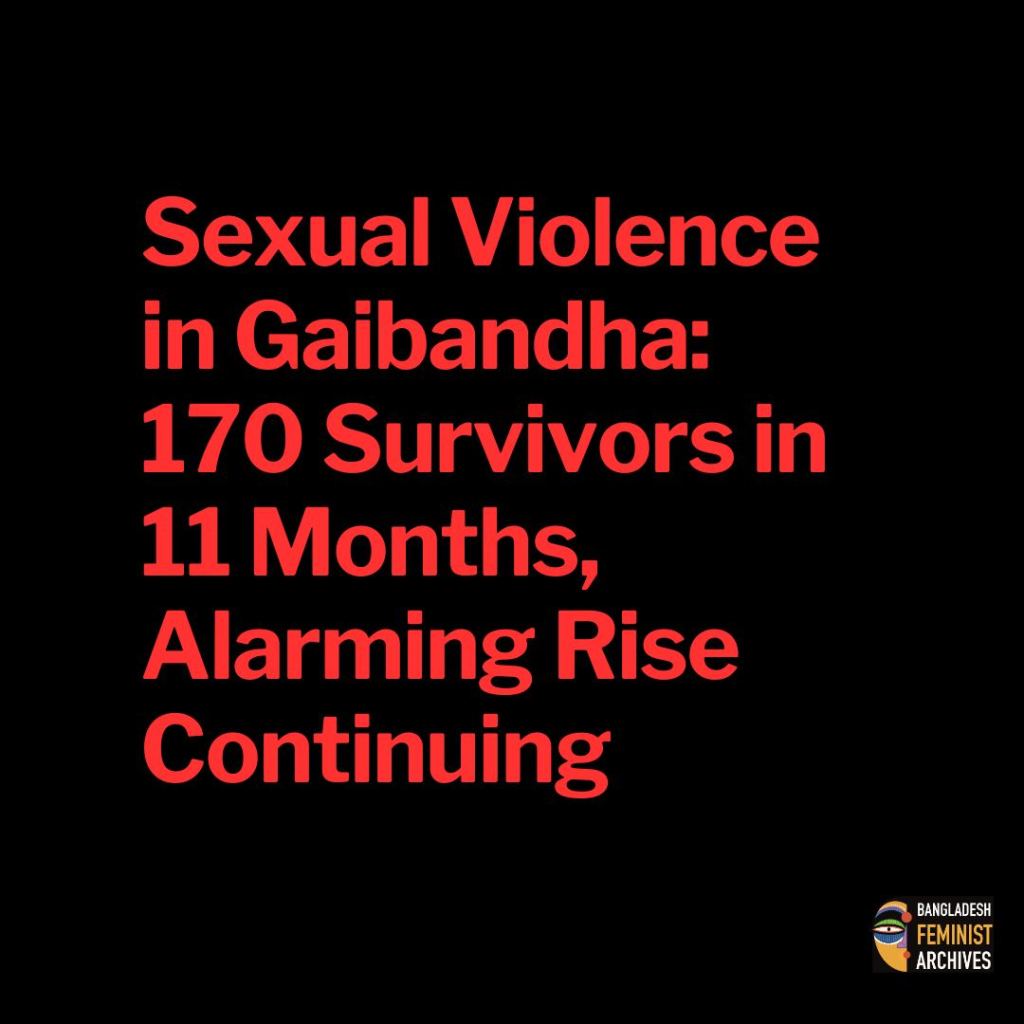
Sexual violence in Gaibandha continues at a disturbing pace. Between January and 5 November 2025, 170 women and children were raped or physically assaulted—already higher than 162 cases in 2024. Government health records show that survivors include children and adolescents aged 5–17, as well as women aged 18 to 70. Families say fear and psychological stress have intensified, as even basic safety for girls and women feels uncertain.
Throughout the year, multiple cases exposed the scale of impunity. In Sadullapur, a Class II child was raped on October 18; the next day, a 75-year-old woman was assaulted in Dhaperhat, the accused still absconding. That same night, a woman in Gobindaganj was raped by three men including a local political leader. On October 29, locals detained a man in Palashbari for raping a teenager. In August, a newlywed was gang-raped by her husband’s friends, with only the husband sent to jail while six others were released. These cases highlight repeated failures in investigation, enforcement, and accountability.
According to the One-Stop Crisis Cell (OCC) in Gaibandha, from January to November, 170 faced physical violence, 8 faced mental abuse, and 8 children were sexually assaulted. OCC officials say their small team struggles to meet the need for medical, legal and psychosocial support. Women’s rights groups report that the absence of exemplary punishment, loopholes in the legal process, and easy access to bail embolden perpetrators.
Local rights organizations and legal experts warn that the pattern reflects a broader moral and social deterioration. They emphasize that policing alone cannot prevent rape—communities, families, schools, religious institutions and local leadership must engage in sustained awareness, value-building and safeguarding practices. Police officials state that accused persons in recent cases have been arrested from different districts, but acknowledge that without collective social responsibility, protection for women and children remains fragile.
 Bangladesh Feminist Archives