
by Hana Shams Ahmed
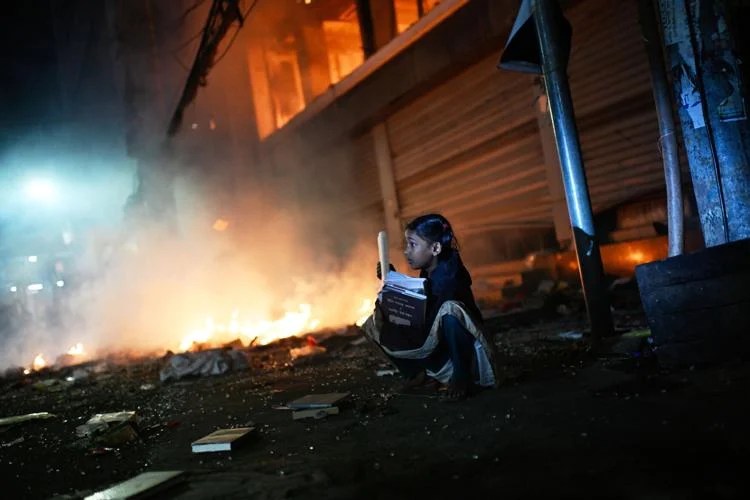
The offices of The Daily Star and Prothom Alo, and the premises of Chhayanaut, have been vandalized and destroyed. These are institutions that embody free thought, freedom of expression, and cultural life in Bangladesh. Their destruction is not an isolated incident. It is a symptom of a more profound and long-unfolding crisis.
Muhammad Yunus can no longer evade responsibility for the chaos in the country. For far too long, he has explained it away, looked away, or refused to acknowledge it altogether. This did not begin yesterday.
His refusal to accept accountability is not new. When criticisms of Grameen Bank were raised, he showed no interest in responding. Why would he? He was a Nobel Prize laureate with direct access to global power, particularly in the United States. He positioned himself above criticism, and those around him reinforced that insulation. But no one is above criticism. No one.
Yes, Sheikh Hasina persecuted him. It was one narcissist pitted against another. Her persecution of Yunus was unjustified, petty, and politically disastrous. It eroded her own legitimacy. She could not tolerate the fact that Yunus had received the Nobel Prize, while her sycophantic supporters repeatedly claimed she deserved one for signing the Chittagong Hill Tracts Accord.
But when Yunus assumed power through the interim government, there was hope that he would rise above personal vendettas and focus on the people of Bangladesh. Instead, it became clear very quickly that revenge against Sheikh Hasina mattered more to him than public responsibility or moral leadership.
Attacks on Baul communities, on Hindus, on Adibashis in the Chittagong Hill Tracts, and on women continued while Yunus remained silent. Worse, he began accommodating Islamist forces. During the July Uprising, when Indian media claimed Islamists were behind the protests, many of us strongly rejected that narrative. We continue to reject it. The July Uprising was a spontaneous, nationwide response to Sheikh Hasina’s order to kill civilians and her utter disregard for human life. Her public mourning for damaged infrastructure instead of dead citizens revealed a chilling absence of empathy. Since independence, few moments have represented such a direct assault on the Bangladeshi people by their own head of government.
Yet Yunus’s silence in the face of violence against Bauls and women revealed a dangerous turn. It signalled alignment with Islamist forces. In his interview with Mehedi Hasan, he explicitly avoided responsibility for attacks on minorities. His evasive language mirrored the very style of governance he once condemned under Hasina. It was indefensible.
His disregard for the Women’s Commission recommendations and his failure to address mob attacks against women confirmed that this descent was rapid and deliberate.
The attacks last night on The Daily Star, Prothom Alo, and Chhayanaut now make it clear the direction in which Bangladesh is being pushed. Tasneem Khalil has already stated publicly that adviser(s) within the interim government want Bangladesh to follow an Afghanistan-style trajectory.
These institutions had nothing to do with Osman Hadi’s death. The Daily Star and Prothom Alo are the country’s leading newspapers. They have critically examined every government, including those they may sympathize with, and they have done so constructively. Chhayanaut represents the heart of Bengali culture, an institution that has for decades nurtured language, literature, and artistic expression.
What exactly is the rage against them?
This is a national disgrace. Muhammad Yunus and his circle of advisers are now actively pushing Bangladesh toward the very future Indian media warned about after the July Uprising.
Shame on this interim government. You are steering Bangladesh toward destruction.
 Bangladesh Feminist Archives