
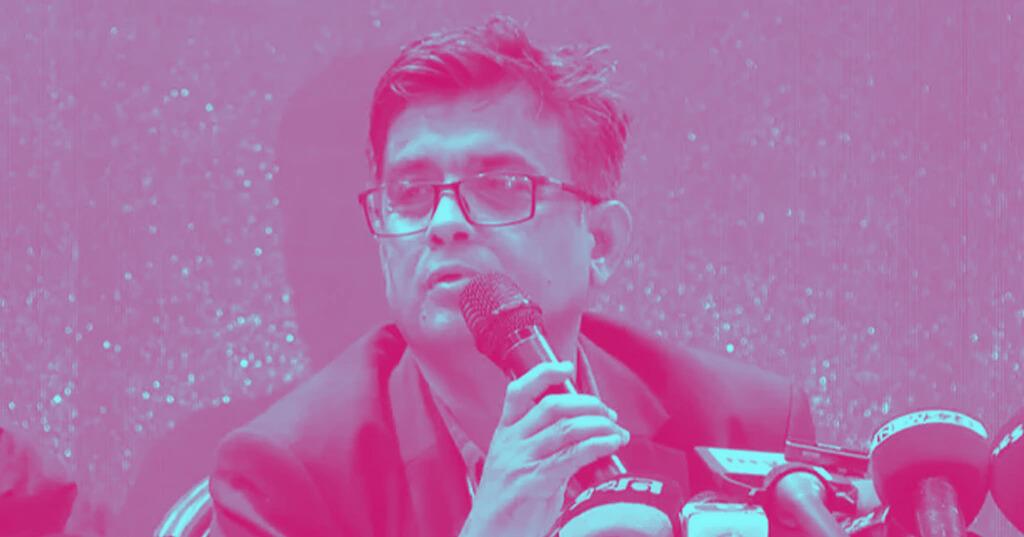
Written by Ayesha Abrar Nawshin
You failed our women. Do not blame feminists. Your failure is not ours to carry.
I understand your disappointment. When women candidates cannot secure the embarrassingly few seats they were nominated in, it feels like a collective setback, doesn’t it? We all want to see more women in Parliament. We all want to believe that if we speak loudly enough about representation, it will materialise. I am sorry to burst your bubble, and I will try to explain it as simply as possible.
When you say that women’s and feminist groups “failed” these candidates, I have to pause at the setback you are creating, a setback bigger than the outcome of this election.
You are treating feminism as if it were an election management body with field organisers, campaign funds, and a constitutional duty to secure seats. Or an employed group of people responsible for amplifying women’s participation in this election. It is not. Feminism is a political philosophy and social movement that challenges gendered power structures. It pushes for equal rights, equal visibility, and equal participation. It questions the status quo and existing systems. It does not replace political parties, nor does it control candidate selection, campaign finance, or media airtime. It also does not replace the government’s duty to educate the nation with values grounded in equity and justice. It does not replace the resources your government was supposed to provide for potential women candidates. Feminism is an ideology to hold, not a full time job. And, as with any ideology, feminism has its own sections, divisions, differences, and opinions. It is barely monolithic.
You ask where feminist groups were in campaigning. Let me ask you something in return. Who controls party nominations? Who decides which candidate receives funding? Who shapes media narratives? Who sits inside editorial rooms? Who could ensure that the election commission does its due diligence? Who has the platform to influence public discourse daily? Who has the responsibility to vote for the deserving candidate? Who was responsible for ensuring a fair campaigning process?
People like you. And journalists. The Interim Government. The political parties. The affiliated bodies. The mass public, and the mob you have oh so graciously fueled many times, naming them a pressure group.
The unforgiving streets of Dhaka, in your own words, are truly unforgiving of women. Have you thought about what it takes to make the streets forgiving? Have you tried creating a level playing field? How dare you demand women to appear on streets that punish them for existing, and then fault them for not performing courage for your approval? Our women do not exist to fill the gaps you failed to close.
Research across democracies consistently shows that political parties act as the primary gatekeepers to women’s representation. UN Women has repeatedly documented that women’s electoral success depends heavily on nomination in winnable seats, access to resources, and institutional backing. Civil society activism cannot compensate for structural exclusion inside party machinery.
Political theorist Anne Phillips argues in The Politics of Presence that representation requires institutional commitment. Parties must change their rules. Leadership must redistribute power. Solidarity alone does not win elections when institutions remain unequal.
You criticise participating in seminars in hotel halls. Are such seminars only exclusive to feminists? Or does being a feminist require boycotting air conditioned facilities and comfort as proof of authenticity? Why is there this persistent male fantasy that women must suffer visibly before their voices deserve to be heard? But let me tell you, those seminars, research papers, and advocacy campaigns built the very language of representation that we now use so casually. Feminist movements in Bangladesh pushed for labour rights, legislation against violence, access to education, and policy reform long before representation became a talking point. That work laid the foundations. It did not promise parliamentary seats on demand. Feminists have been working for women, and everyone else, in this country long before your work for the country began, Mr Alam. Anyone can be a feminist. It is not a term that belongs only to women, yet how casually you make women and feminism synonymous with each other.
You ask, “Shouldn’t women’s groups have stood with her [Tasnim Jara]?” Well, I ask you, shouldn’t everyone have stood with her? Is intellectual decision making only for women? And should all women support a woman candidate only because she is a woman? Is this the critical thinking and analytical skill you expect from the women of your country?
And let us be honest about something else. When a male candidate runs, do we ask where the men’s groups were? Do we ask whether male journalists, male doctors, male labour activists spent a full day campaigning for him? We do not. We assume the system will carry him. When a woman runs, we suddenly assign moral responsibility to feminists or fellow women.
Why?
Feminist economist Naila Kabeer reminds us that empowerment requires resources, agency, and structural opportunity. Without access to party networks, financing, and media amplification, even the strongest candidate faces an uneven field. You cannot expect volunteer enthusiasm to substitute for institutional power.
You say women’s groups should have stood with these candidates. Yes, solidarity matters. But solidarity does not override nomination politics. It does not replace the long history of patronage networks in our election history. It does not control campaign tactics. Those levers sit with the people, political elites, and media actors.
You held one of the most visible communication roles in the country. If you believe women deserved stronger amplification, what did you do with your platform? Did you centre them consistently? Did you interrogate party hierarchies? Did you push for structural reform? Or do you now find it easier to redirect frustration toward feminists, like almost every patriarchal body?
I must remind you, women’s representation is not a side project for women alone. It is a democratic obligation. Political parties, media institutions, civil servants, journalists, labourers, leaders, and voters all share that responsibility. You cannot outsource it to feminists and then accuse them of failure.
Feminists do not exist to rescue institutions from their own inequities. We exist to challenge them. It was your duty to take up that challenge.
So if we truly care about female candidates, let us talk about power. Let us talk about the safety for women that your interim government failed to provide. Let us talk about who actually controls public spaces. Let us talk about how your government failed to take accountability while staying silent when the mob kept weaponising misogyny during your entire term. Silence is complicity, dear ex press secretary.
And most importantly, stop placing feminists on a pedestal only to blame them when the system refuses to change, when you refuse to change.
My problem is that when you speak of feminists as if they are some separate group, detached from yourself, you position yourself outside feminism. What a shame.
But I give you the benefit of the doubt and ask: Are you a feminist, Mr Alam? If so, thank you for accepting your own shortcomings, even if not explicitly. If not, that is a bigger concern. Ask yourself, Mr Alam. Why are you not? Do you not believe in equality? Maybe your preachings should start once you have made this self reflection. Until then, shut up.
Respectfully,
A Frustrated Feminist Tired of Bearing the Labour Alone
Bibliography
- UN Women. Women in Politics: 2023 Map. Available at: https://www.unwomen.org/en/digital-library/publications/2023/03/women-in-politics-map-2023
- Anne Phillips (1995). The Politics of Presence. Oxford: Clarendon Press.
- Naila Kabeer (1999). “Resources, Agency, Achievements: Reflections on the Measurement of Women’s Empowerment.” Development and Change, 30(3), 435–464. Available at:https://onlinelibrary.wiley.com/doi/10.1111/1467-7660.00125
Ayesha Abrar Nawshin is a feminist, gender justice researcher, and human rights worker, currently pursuing a Master’s degree in Gender, Violence and Conflict at the University of Sussex, UK.
 Bangladesh Feminist Archives