
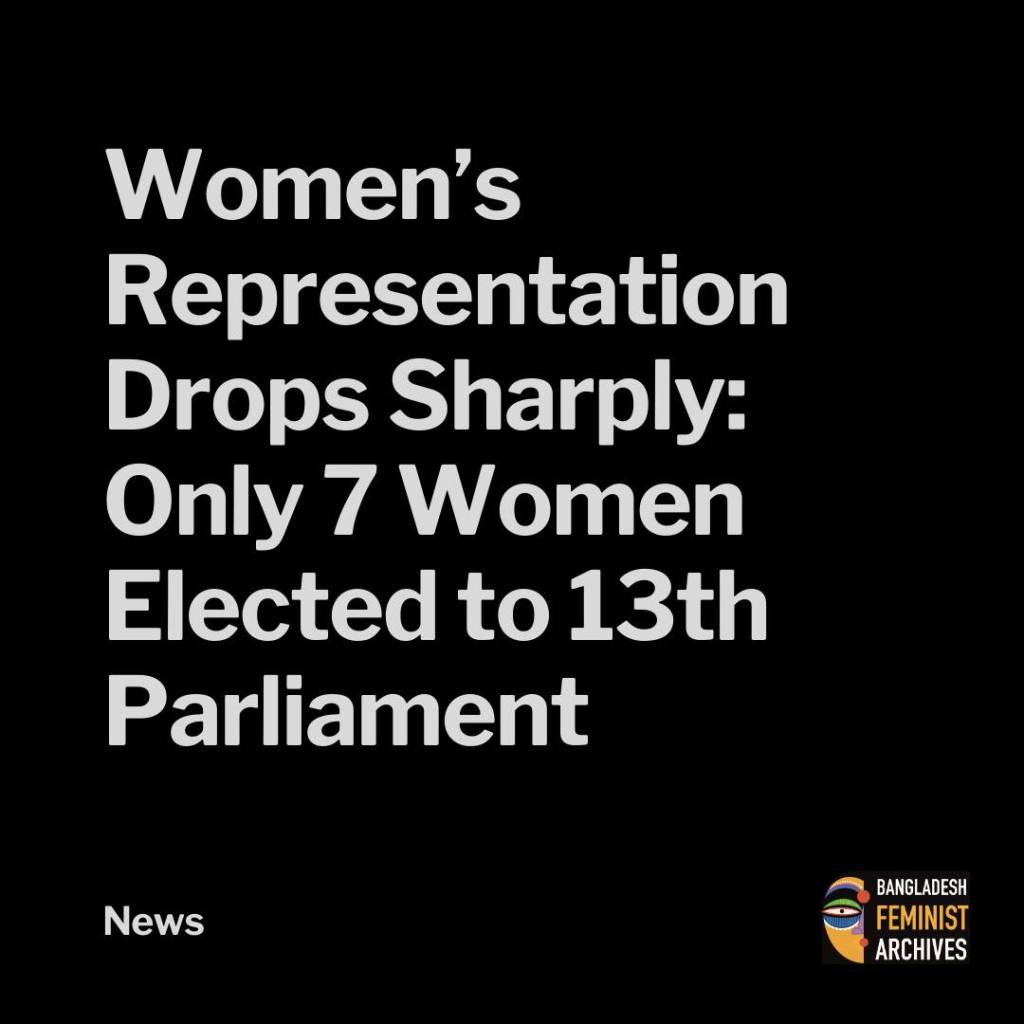
Women’s direct representation in Bangladesh’s parliament has fallen to one of its lowest levels in recent history. In the 13th parliamentary election, only seven women were elected out of 297 seats, despite women constituting nearly half of the electorate. A total of 1,981 candidates contested the election, but only 81 were women, just 4.08 percent of all candidates.
This marks a steep decline from previous elections. In 2018, 22 women were directly elected; in 2024, that number fell to 19. Earlier parliaments also saw higher participation, with 18 women elected in 2014 and 19 in 2008. The current result reflects a long-term downward trend in women’s electoral success through direct voting.
Of the seven winners this year, six were nominated by BNP, which secured a parliamentary majority and is set to form the government after winning 209 seats. The remaining winner, Rumin Farhana, ran as an independent candidate after being expelled from BNP. The elected women MPs are Afroza Khan Rita (Manikganj-3), Shama Obaid (Faridpur-2), Nayab Yusuf Kamal (Faridpur-3), Israt Sultana Elen Bhutto (Jhalokati-2), Tahsina Rushdir Luna (Sylhet-2), Rumin Farhana (Brahmanbaria-2), and Farzana Sharmin Putul (Natore-1).
Several of the winners have strong political family backgrounds or prior party roles. For example, Afroza Khan Rita is the daughter of former minister Harunur Rashid Khan Munnu, while Tahsina Rushdir Luna entered politics after the disappearance of her husband, former MP M. Elias Ali. Despite these individual victories, the overall outcome highlights the shrinking space for women in parliamentary politics through direct elections.
Women’s representation in parliament will now depend heavily on reserved seats rather than direct electoral success, raising renewed concerns among rights advocates about structural barriers that limit women’s participation as candidates and decision-makers.
Source: bdnews24.com
 Bangladesh Feminist Archives