
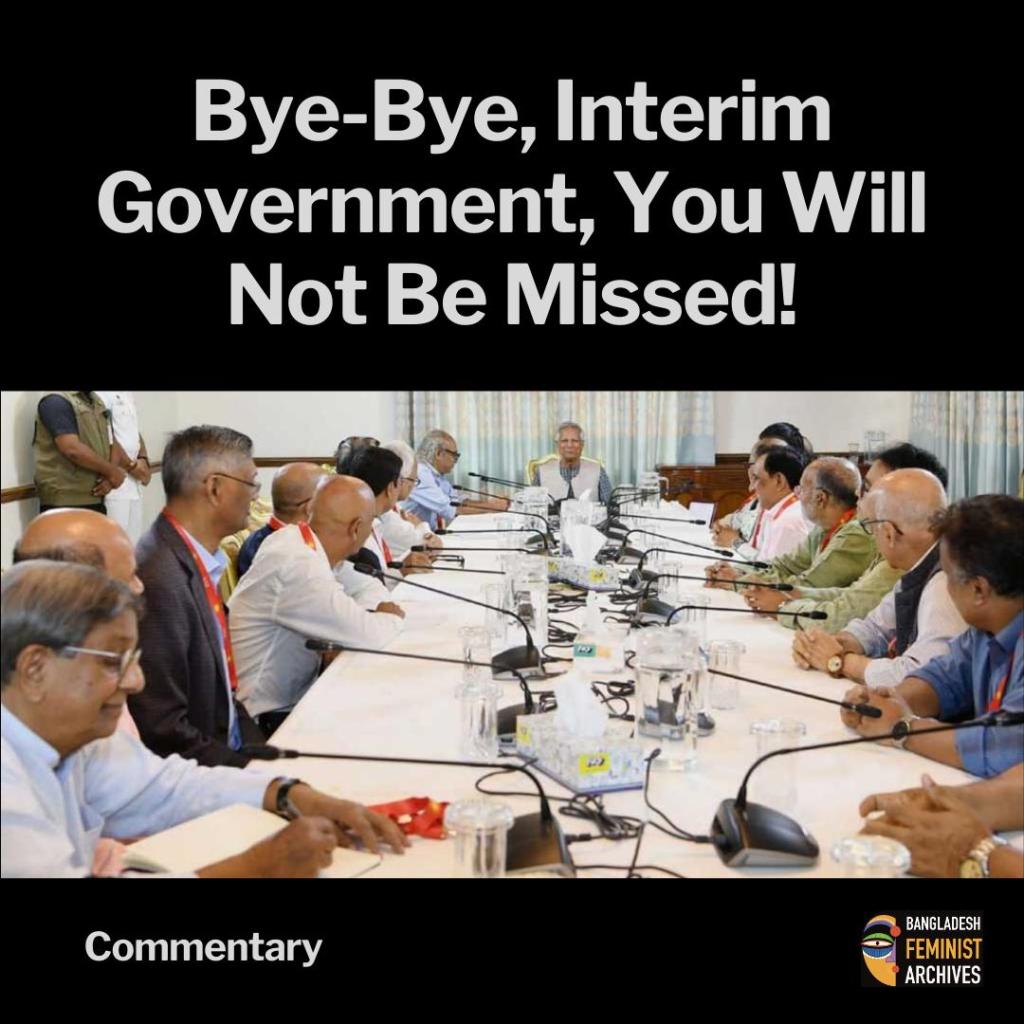
As Bangladesh swears in a new government on 17 February 2026, the Yunus-led interim administration leaves office the way it governed: with lofty language, weak protection, and a widening gap between “transition” and justice.
This was not an ordinary handover. The July 2024 uprising followed years of shrinking civic space and ended in a crackdown so severe that the UN estimated up to 1,400 people were killed; the interim leadership later cited around 1,500 deaths. A caretaker born from that rupture owed the country one thing above all: safety with accountability. It did not deliver.
The “reset” election it supervised, Bangladesh’s 13th parliamentary vote, paired with a constitutional reform referendum, did not fix the fundamentals. Women were again treated as expendable: only 4.24% of candidates were women, despite a public pledge to nominate at least 5% under the July Charter process. “Inclusion” remained a slogan; power remained gated.
Minority protection also failed the most basic test. Rights monitors documented more than 2,000 incidents of violence against minorities after the 2024 rupture, including 61 killings, alongside repeated allegations that perpetrators walk free. When citizenship becomes conditional in an election cycle, “order” is just another campaign prop.
Political violence did not recede. Reporting in the lead-up to the vote described a climate of intimidation and vigilantism, with activists killed after the election was announced. A transition that cannot protect dissent cannot claim democratic repair.
And the July National Charter, held up as proof of reform, became a document without teeth: contested, easily violated, and thin on binding guarantees for women, minorities, workers, Indigenous communities, and queer and trans people. Bangladesh still retains Section 377; legal precarity remained policy.
So yes: goodbye. Not with sentiment, with clarity. A new government now takes office under the shadow of promises the interim could not keep. Elections may change who governs. They do not, by themselves, change who is protected.
 Bangladesh Feminist Archives