
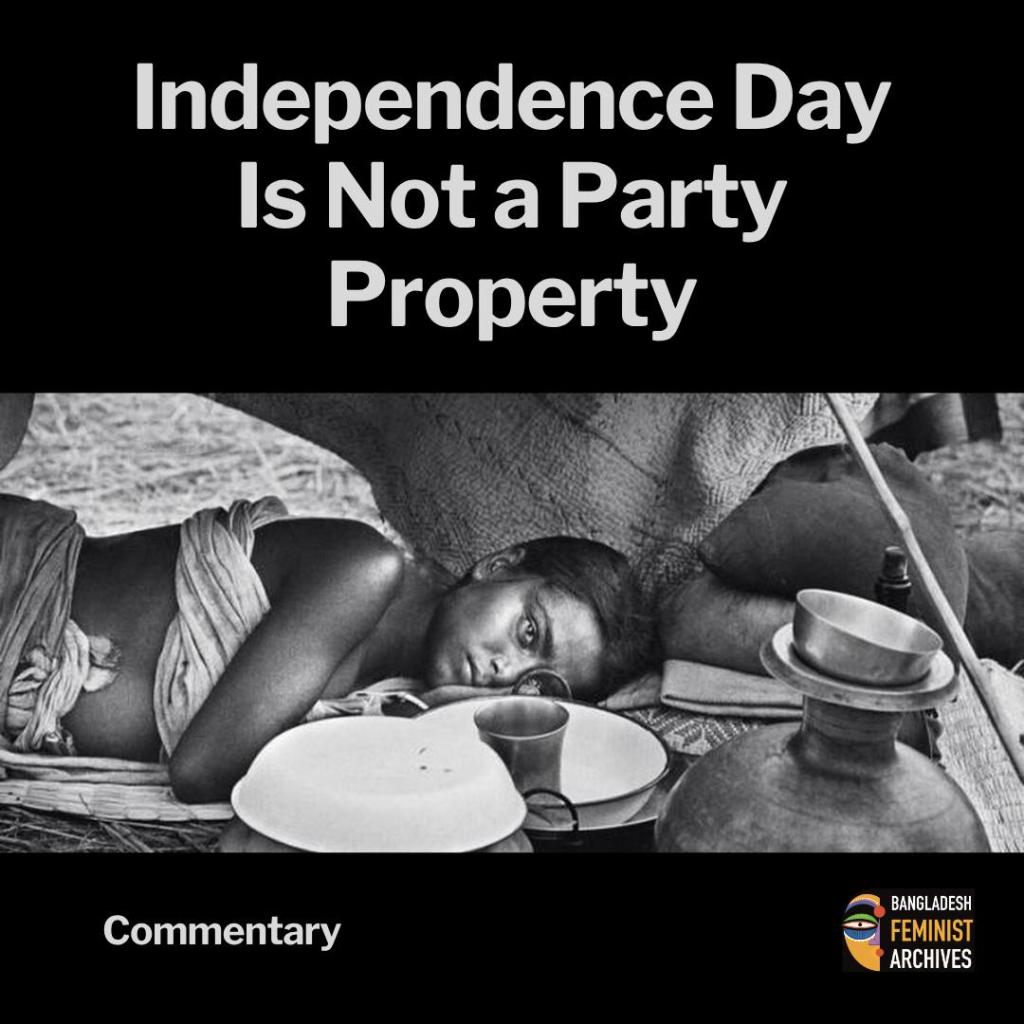
This Independence Day, 26 March 2026, the struggle is no longer only about remembering 1971; it is about who gets to define it. Across Bangladesh, the Liberation War is being pulled apart, not in search of truth, but in the service of power. For years, it was claimed, polished, and weaponized by those in authority. Now, in reaction, we are seeing attempts to dismiss it, dilute it, or replace it altogether. Between these two forces, history itself is being suffocated.
The political use of 1971 is not new, it has been turned into a shield, used to silence dissent, to claim moral superiority, and to redraw the boundaries of belonging, but what we are witnessing now is not a correction of that misuse. It is a backlash that risks collapsing history into convenience. Disillusionment with those who captured the Liberation War is now being used to question its legitimacy altogether.
Calling 1971 propaganda, reducing it to a foreign agenda, or positioning newer political moments as replacements does not challenge power; it reproduces another version of it. It allows actors to avoid accountability while rewriting history on their own terms. This is not critique, this is erasure.
1971 does not belong to any party, but it is not disposable either. The war was not a slogan; it was lived, fought, and survived by millions whose stories cannot be reduced to political strategy. To either monopolize it or abandon it is to betray that history.
If 26 March is to mean anything, it must resist both; not by returning to old myths, but by refusing to let the Liberation War be captured, traded, or rewritten for short-term gain. History does not belong to power, and it cannot be remade without consequence.
 Bangladesh Feminist Archives