
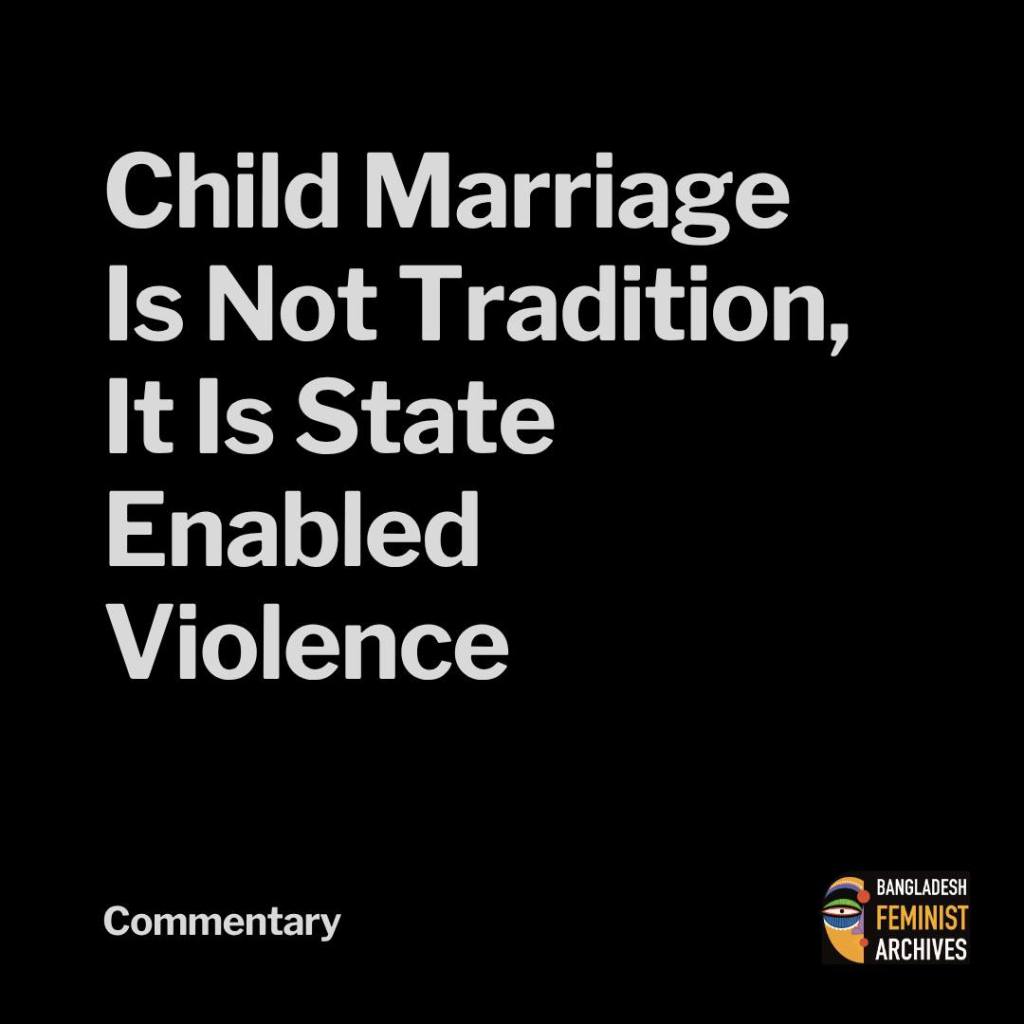
Child marriage in Bangladesh continues to be framed as a “social problem,” but this language hides what it truly is: a systematic form of gendered violence sustained by law, economy, and silence. When families marry off girls under pressure, it is not simply “culture” at work, it is a structure that normalizes the disposal of girls’ futures in the name of survival and the law itself reveals this contradiction.
While the state sets the minimum age at 18 for girls, it simultaneously creates loopholes, allowing marriage at 16 under “special circumstances.” This exception is not neutral; it becomes a tool through which coercion is legalized, where “consent” is often shaped by fear, poverty, and patriarchal control. The law does not just fail to prevent child marriage; it actively accommodates it.
Punishments under existing frameworks remain weak and inconsistent. A month’s imprisonment or small fines do little to disrupt a practice so deeply embedded in economic precarity and social expectations. More troubling is how accountability is uneven, women are exempt from imprisonment, but the broader system that enables these marriages remains untouched. The focus stays on individuals, while structural violence escapes scrutiny.
The persistence of child marriage also reflects the state’s failure to ensure education, safety, and economic stability for girls. In contexts where harassment, insecurity, and lack of opportunity define everyday life, early marriage is presented as protection. But protection from what and at whose cost? The answer exposes a deeper crisis of governance and gender justice.
To address child marriage meaningfully, Bangladesh must move beyond symbolic laws and confront the realities that sustain it. This means closing legal loopholes, strengthening enforcement, and investing in the lives of girls beyond marriage. Until then, child marriage will remain not just a violation of rights, but a quiet, normalized form of violence the state continues to permit.
 Bangladesh Feminist Archives