
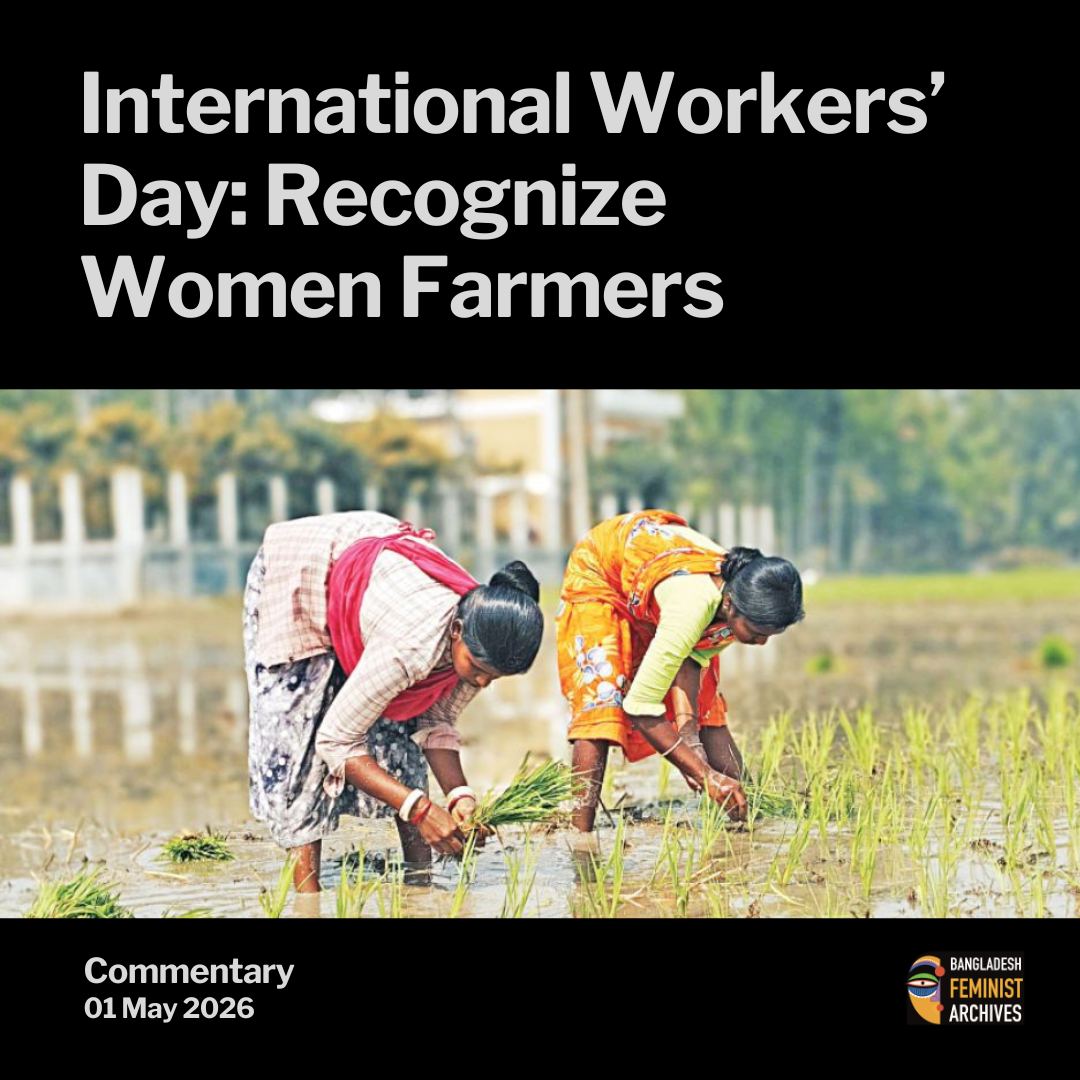
On International Workers’ Day, it is important to ask what it means to speak of “workers” in a context where some forms of labor are systematically denied recognition. In Bangladesh, women in agriculture are not outside the labor movement; they are at its core, but the structures that organize labor, policy, and rights continue to treat them as secondary, informal, or invisible.
Women carry out the majority of agricultural work, from seed preservation to post-harvest processing, but they are still not formally recognized as farmers. This exclusion is not accidental. It allows the state, markets, and institutions to rely on their labor without extending the rights that come with recognition. Wage disparity is one visible outcome of this system, where a significant proportion of women agricultural workers are paid less than men despite doing equal or greater work. But the issue runs deeper than wages; it is about who is counted within the category of labor itself.
By keeping women outside official farmer registries, data systems, and support programs, the state reproduces a structure where women’s labor is essential but politically expendable. They remain excluded from subsidies, from technological resources, and from social protections that are framed around the “farmer” as implicitly male. This is how exploitation is normalized, not through absence, but through selective recognition.
There is also a political convenience in this invisibility. When women are not counted as farmers, their demands do not register as agricultural demands. Their struggles over wages, safety, and working conditions are displaced into the private sphere, disconnected from labor rights discourse. This fragmentation weakens collective resistance and allows inequality to persist without accountability.
On this May Day, centering women farmers is not symbolic; it is a political necessity. Any claim to labor justice that does not confront the gendered structure of recognition, value, and rights remains incomplete.